Neurodiversity and Team Building: Designing Activities That Value Every Way of Thinking
The first person immediately speaks up. The second watches in silence. The third starts drawing a diagram on a sheet of paper. Someone else notices a detail nobody had considered.
The challenge has just begun.
The group needs to find a solution, but not everyone approaches the problem in the same way. Some think quickly, some need a few minutes to process the information, some think in images, some look for a logical sequence, and some can connect seemingly unrelated elements.
Then, suddenly, the solution appears.
It doesn't belong to just one person.
It's the result of different ways of observing, reasoning, and communicating coming together.
It's in situations like this that Team Building and neurodiversity can come together particularly effectively: not to ask everyone to think the same way, but to create experiences in which cognitive differences can become a resource for the whole team.
What is neurodiversity?
Neurodiversity refers to the natural variety in the ways people process information, learn, communicate, pay attention, remember, and tackle problems.
Neuroinclusion is an increasingly important topic in the workplace because companies are made up of people with different experiences, skills, and cognitive styles.
Conditions commonly included in the concept of neurodivergence include, among others, autism, ADHD, dyslexia, dyscalculia, and dyspraxia.
However, it's essential to avoid generalizations. There's no single way to be neurodivergent, and every person has different characteristics, needs, and strengths.
For this reason, neuroinclusive Team Building</strong> shouldn't try to create an experience based on stereotypes.
Instead, it should create the conditions for every participant to find an effective way to contribute to the shared outcome.
Why neurodiversity can become a resource for Team Building
Many corporate activities are built around a simple dynamic: a goal is set, and the group has to reach it within a specific time limit.
But speed isn't the only measure of effectiveness.
A team needs people who can observe, analyze, remember, make connections, spot errors, organize information, communicate, and make decisions.
One person may be especially quick at working out a solution. Another may have an extraordinary ability to observe. A third may notice a risk nobody had considered.
When these skills come together, individual differences can become collective intelligence.
This is one of the most interesting goals of a https://www.teambuildingrome.com/it/teambuilding/teamexperience/ corporate Team Building experience: creating situations in which people can discover not only what they can do individually, but also what they can create together.
How to design neuroinclusive Team Building
Neuroinclusion isn't simply a matter of adding the word “inclusive” to the name of an activity.
It requires careful planning of the entire experience: communication, environment, duration, rules, roles, ways to participate, and the final debrief.
Clear rules and simple communication
The first thing to consider is clarity.
Instructions should be organized and easy to understand, and, if the activity has complex rules, ideally accompanied by practical examples.
Clear instructions reduce ambiguity and allow participants to focus on the actual challenge rather than interpreting the instructions.
This principle is especially useful in logic games, treasure hunts, and https://www.teambuildingrome.com/it/teambuilding/urbangames/ Urban Games in Rome, where there may be a lot of information, clues, and time constraints.
Respecting different processing times
Not everyone processes new information at the same speed.
In a competitive activity, it may seem natural to reward whoever answers first. But an immediate answer isn't necessarily the most effective one.
Giving the group a few moments to observe, discuss, and test a hypothesis can help different skills emerge.
This way, more reflective thinking can also become part of the strategy.
Creating different roles
One of the most effective solutions is to let participants take on different roles.
During a treasure hunt, one person can handle the map, another the clues, someone else time management, and another the strategy.
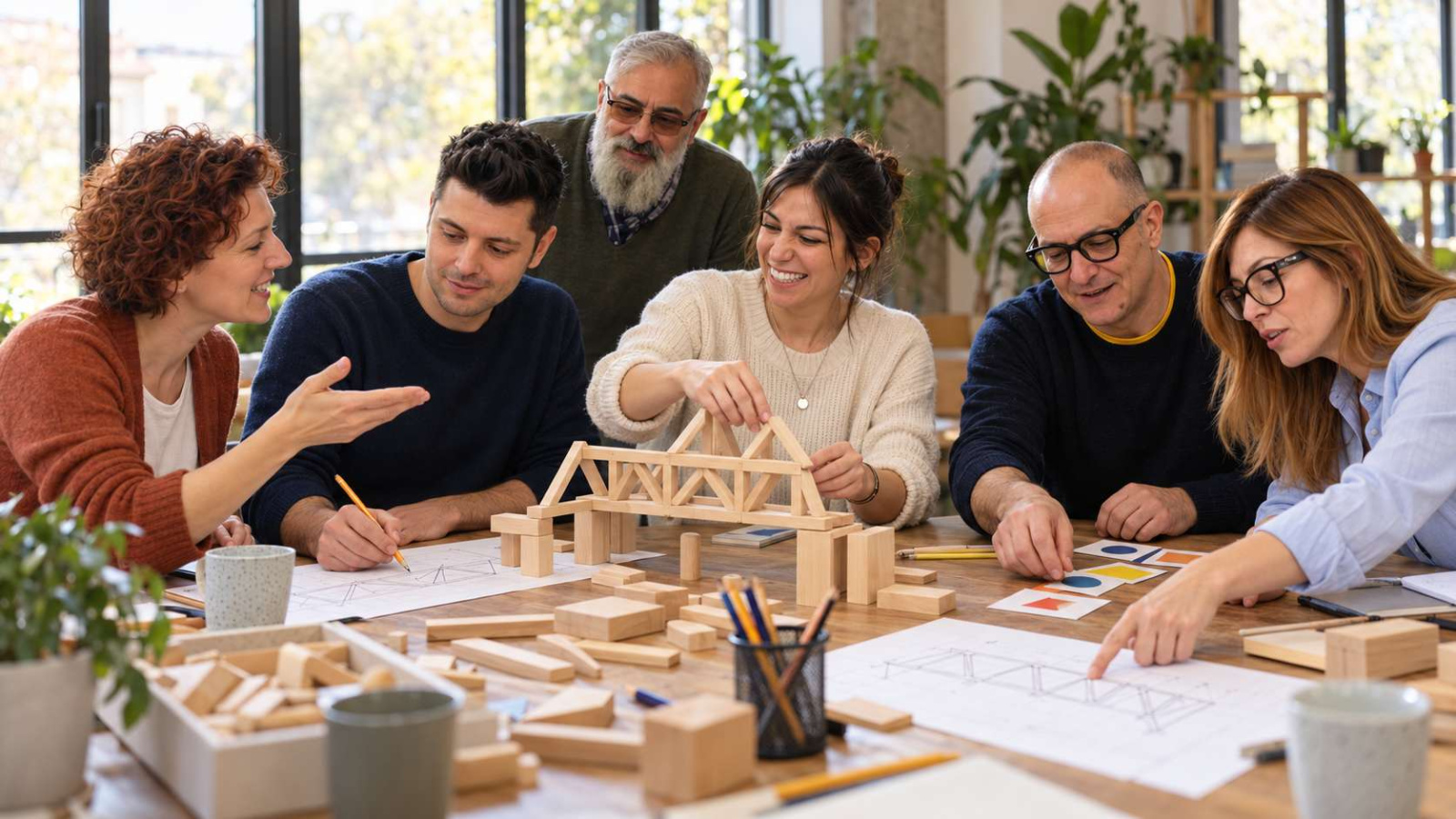
In a creative activity, one person can design, another build, and yet another present the result.
The key idea is simple: <strong>participating doesn't necessarily mean everyone has to do the same thing</strong>.
Problem-solving and neurodiversity: when thinking differently solves the challenge
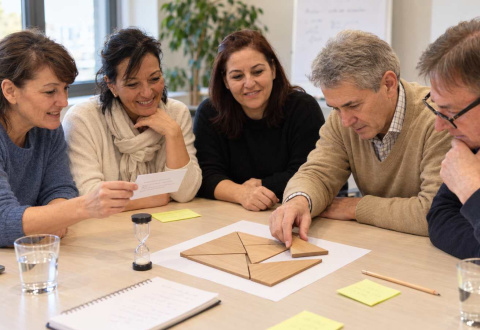
Imagine a team gathered around a table.
There are photographs, numbers, symbols, and seemingly unrelated objects.
The task is to find a code.
The group starts looking for a sequence of numbers. Minutes pass, but nothing emerges.
One person looks at a photograph.
They notice a detail the others had overlooked.
They don't immediately propose a solution. They simply ask a question:
“What if the numbers aren't the code, but point to something in the pictures?”
The team changes perspective.
The detail becomes the key to the puzzle.
This dynamic perfectly illustrates the value of cognitive diversity: <strong>a different way of interpreting the problem can completely change the group's strategy.
That's also why activities such as https://www.teambuildingrome.com/it/teambuilding/indoor-escape-games/escapemuseum.php Escape Museum can be interesting from a neuroinclusive perspective. The experience combines puzzles, codes, observation, and problem-solving in an exhibition dedicated to Leonardo da Vinci in Rome's historic center.
Escape games: one team, many ways to find the solution
A well-designed escape game doesn't necessarily require everyone to be good at the same thing.
One puzzle may require logic. Another may call for observation. Another may rely on memory. Yet another may require the ability to connect information.
This allows different people to contribute using different skills.
https://www.teambuildingrome.com/it/teambuilding/indoor-escape-games/escape-box-team-building-roma.php Escape Box, for example, turns an ordinary room into an investigative scenario where the group must interpret clues, codes, and objects and work together to reach the final goal.
The advantage of this kind of experience is that success doesn't necessarily depend on one person's performance.
It depends on the group's ability to bring different pieces of information together.
Urban games and treasure hunts: Rome becomes a workshop
Another way to design neuroinclusive Team Building is to take the team out of the meeting room.
Rome offers a particularly rich setting: squares, monuments, parks, alleys, and historic sites can all become part of a mission.
A https://www.teambuildingrome.com/it/teambuilding/treasurehunt/ treasure hunt in Rome can alternate between observation, navigation, information gathering, problem-solving, and communication.
The city thus becomes part of the activity.
A monument may contain a clue. A square may become a meeting point. An architectural detail may provide the answer to a question.
The result comes from combining observations made by different team members.
Villa Borghese: an ideal setting for combining movement and strategy
https://www.teambuildingrome.com/it/teambuilding/cacce-al-tesoro-urban-games/senza-freni-team-building-villa-borghese.php Villa Borghese makes it possible to create experiences in which movement, navigation, strategy, and collaboration can come together in a large green space.
In the Senza Freni – Rome Pedal Quest format, for example, teams use pedal-assisted rickshaws and tackle a course where organization, strategy, and collaboration are more important than simply going fast.
This is also an interesting principle from a neuroinclusive perspective: performance doesn't depend solely on who's fastest, but on the group's ability to distribute tasks and make the best use of time and resources.
Creativity: when there isn't just one right answer
Creativity offers another particularly interesting opportunity.
When the goal isn't to find a single answer but to create something original, individual differences can emerge more freely.
Someone may have an idea. Someone else may turn it into a plan. Another person may take care of bringing it to life.
An activity such as https://www.teambuildingrome.com/it/teambuilding/urbangames/ The Wacky Race, for example, has teams design and build an original vehicle to race, bringing together creativity, organization, and collaboration.
In this kind of experience, everyone doesn't need to have the same way of thinking. It's the combination of ideas that determines the result.
The role of the environment in neuroinclusion
Neuroinclusive Team Building should also take into account the environment in which it takes place.
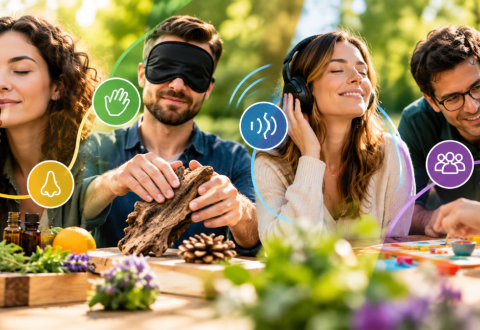
Noise, crowds, lighting, very confined spaces, and overlapping stimuli can affect some people's experience.
This doesn't mean eliminating every stimulus or making the activity completely neutral.
It means designing thoughtfully.
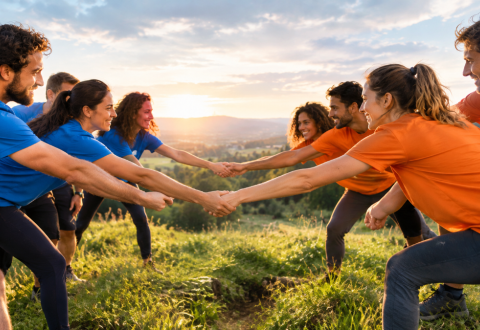
An outdoor activity can offer more space and opportunities to move. A room may be preferable when the goal is to focus on logic and communication. A museum can turn cultural stimuli into elements of a game.
So the venue isn't just a backdrop.
It's one of the tools used to shape the experience.
Neurodiversity and leadership: discovering talents that usually remain hidden
Neurodiversity can also offer an interesting perspective on the concept of leadership.
In meetings, we're often inclined to identify as leaders those who speak the most, are quick to speak up, or take control of the discussion.
In a challenge, however, other forms of leadership can emerge.
Some people know how to organize.
Some analyze.
Some identify a risk.
Some notice a detail.
Some find an original solution.
Some can listen to everyone and turn different ideas into a strategy.
A well-designed experience can therefore show that leadership doesn't necessarily take just one form.
It can change depending on the situation and the skills required.
The debrief: turning experience into learning
Effective Team Building shouldn't end with announcing the winning team.
The moment after the challenge is essential.
The debrief allows the group to analyze what happened and connect it to the team's everyday dynamics at work.
Questions that can lead to new insights
Did we listen to everyone?
Who had the decisive idea?
Did we give enough space to those who spoke less?
Did we confuse speed with competence?
Which role emerged naturally?
How did we react to a solution different from the one we had imagined?
Which skills hadn't we considered at the outset?
These questions can turn a simple recreational activity into a meaningful reflection on <strong>workplace collaboration
Neuroinclusion doesn't mean creating a “special” activity
This is perhaps the most important point.
Neuroinclusive Team Building doesn't necessarily have to be a separate activity for neurodivergent people.
It can be an experience that's better designed for everyone.
Clearer instructions help everyone.
Different roles help everyone.
The chance to process information at an appropriate pace can help everyone.
An organized environment can help everyone.
The opportunity to contribute through different skills can help everyone.
Neuroinclusion therefore becomes an opportunity to improve the overall quality of the experience.
Rome and neuroinclusive Team Building: designing tailored experiences
Rome makes it possible to create many different kinds of experiences.
You can start in the historic center and use https://www.teambuildingrome.com/it/teambuilding/treasurehunt/ Piazza Navona, the Pantheon and Campo de' Fiori as part of a treasure hunt.
You can choose the cultural setting of the exhibition dedicated to Leonardo da Vinci with https://www.teambuildingrome.com/it/teambuilding/indoor-escape-games/escapemuseum.php Escape Museum.
Or head to the green surroundings of https://www.teambuildingrome.com/it/teambuilding/cacce-al-tesoro-urban-games/senza-freni-team-building-villa-borghese.php Villa Borghese for an outdoor experience focused on strategy and collaboration.
The choice depends on the company's goals, the characteristics of the group, and the kind of experience you want to create.
It's precisely this customization that makes an inclusive Team Building project in Rome effective: start with the people who will take part, not the activity.
A team's real strength lies in thinking together, not thinking alike
By the end of the day, the game is over.
The clues, papers, and objects used during the challenge remain on the table.
Someone says they spotted the solution straight away.
Someone else admits they needed more time.
Another person recalls the detail that completely changed the strategy.
And that's exactly when Team Building can leave the group with something meaningful.
Not when everyone has proved they're the same.
But when everyone has discovered that their way of thinking can have a place on the team.
Neurodiversity doesn't ask us to make everyone the same. It asks us to learn how to work better with differences.
For a company, this means being able to turn different ways of observing, reasoning, communicating, and creating into a stronger collective ability to tackle problems and find solutions.
Team Building thus becomes much more than a day of fun: it can become a workshop for putting a more inclusive company culture into practice.
If you'd like to take part in this or a similar experience, click here to explore our offerings:https://www.teambuildingrome.com
https://www.teambuildingrome.com/it/ask-for-quote.php Request a free quote and get all the information about your Team Building experience.