
Team Building for Remote Workers: Hybrid Hub, the format for rebuilding cohesion after months apart
For months, we met through a screen.
Faces in little boxes, microphones switched off, company chats, voice messages, and meetings scheduled one after another. Work continued, goals were met, and projects moved forward. But something often changed: the natural ease of relationships.
When a group works primarily remotely or alternates between home, the office, and coworking spaces, collaboration can become very efficient without necessarily being very engaging. People communicate, but meet less often. They work together, but share fewer informal moments. They know their colleagues’ skills and responsibilities, but not always the people behind those roles.
It is precisely this need that inspired the idea of the Hybrid Hub Team Building: a format designed to bring together in person people who have worked remotely for months and turn a corporate gathering into a genuine reconnection experience.
Why hybrid work has changed the way we do team building
Remote work is no longer a temporary solution reserved for certain professions. It has become an established way of working for many companies, and teleworking has continued to play an important role in how work is organized across Europe.
The issue, then, is not to determine whether remote work does or does not work. The real question is different: how do you keep a sense of team spirit alive when opportunities to meet become less frequent?
The answer cannot be simply spending a day together in the office.
When people meet again after months apart, they need something that helps them quickly break through the barrier of professional communication. They need situations that let them talk, collaborate, laugh, make decisions, and deal with minor setbacks together.
Team building thus becomes a way to rebuild the informal side of work that remote working inevitably tends to diminish.
Hybrid Hub: not just an event, but a place to reconnect
Imagine a group of colleagues arriving in Rome for a company day.
Some have known each other for years but have met almost exclusively through Teams or Zoom. Others have worked for the same company for months without ever spending a day together outside the digital environment. Some are used to working from home, others from the office, while others are constantly on the move.
At first, the atmosphere is that of a regular meeting.
Then the first instructions arrive.
The participants are divided into small groups. Each team receives a mission. The computer is no longer needed. The company chat stays in their pockets. To achieve their goal, they need to talk to the people in front of them.
Someone observes, someone suggests a solution, someone takes the initiative. A colleague who rarely speaks up during video calls suddenly becomes essential to solving a challenge.
That is when the group begins to change.
They are no longer just colleagues connected to the same organization. They are people sharing an experience.
How a Hybrid Hub Team Building works
The format can be arranged as a full day, half day, or a few hours, depending on the company’s goals and the number of participants.
1. The Welcome Hub
The first phase is about creating an informal atmosphere.
The group is welcomed at a selected venue and introduced to the concept for the day. The event does not start immediately with a competition: the goal is to give people time to gradually reconnect socially.
A coffee break, a welcome aperitif, or a short icebreaker can provide the first opportunity to talk again without a meeting agenda in front of them.
2. Team Mix: changing group dynamics
One of the most important aspects is how the teams are put together.
When working remotely, people often tend to interact with the same colleagues: their department, their manager, or the colleagues they share most of their projects with.
An effective Hybrid Hub breaks these habits.
Teams are formed by mixing different roles, departments, and levels of seniority, creating new connections throughout the organization.
Team building thus also becomes an opportunity to discover skills and personalities that would normally remain on the fringes of everyday working relationships.
3. The collaborative mission
The central part of the experience should include a challenge that genuinely requires collaboration.
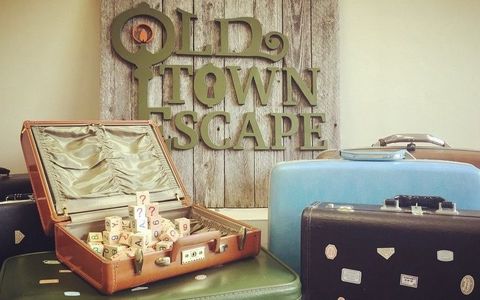
An urban treasure hunt, an urban game, an escape game, a creative challenge, a photography activity, or a culinary challenge can all be turned into a shared narrative journey.
In Rome, for example, the historic center can become a real-life game board. A format such as The Ages of Rome turns squares, alleyways, and monuments into part of the mission, combining navigation, observation, problem-solving, and collaboration.
4. Rome as an open-air Hybrid Hub
Choosing the venue is particularly important for a group accustomed to digital environments.
Leaving the meeting room and exploring a city together completely changes the way people interact.
Villa Borghese, for example, can become the setting for a dynamic, informal activity. An experience such as SPY GAME transforms the park into an investigative trail where teams must observe their surroundings, follow clues, and make decisions together.
The historic center, on the other hand, offers the opportunity to create routes between Piazza Navona, the Pantheon, Campo de’ Fiori, the Jewish Ghetto, and Trastevere, creating an experience in which the city becomes an integral part of the story.
For groups looking for a more creative activity, Rome can be turned into a real film set with a format such as Rome in a Shot, where photography, storytelling, and collaboration become the tools for creating a shared narrative.
The most effective activities for rebuilding cohesion in hybrid teams
Not all team-building activities are equally effective for groups accustomed to remote working.
The main criterion should be the experience’s ability to create genuine, spontaneous interaction.
Urban Games and Treasure Hunts
They are particularly suitable because they require people to communicate, make decisions, and move around together.
The city becomes the playing field, and each participant can contribute according to their abilities: some are good at navigation, others at observation, communication, or strategy.
For an international group, a route such as The Ages of Rome can also be customized and organized in multiple languages.
Escape Games and Mind Games
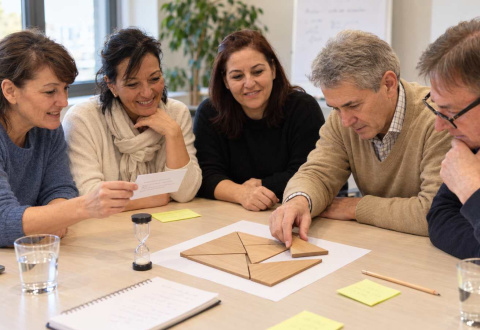
Activities involving puzzles and problem-solving are particularly interesting for hybrid teams because they immediately demonstrate the value of collaboration.
In an Escape Box, for example, no one has all the information needed to find the solution. Each participant must share what they discover and listen to the insights of others.
It is a very effective metaphor for the modern workplace: information is distributed, and success depends on the group’s ability to bring it all together.
Cooking Team Building
Food has a valuable quality: it naturally gets people talking.
Making fresh pasta or pizza together, preparing traditional Roman dishes, or organizing a cooking challenge means working side by side without the formality of a typical company meeting.
Chopping, kneading, tasting, and working together to prepare a shared dish quickly creates a relaxed atmosphere.
Creative and photography activities
For groups made up of people with very different professional backgrounds, creativity can be an excellent way to connect.
In Rome in a Shot, for example, the winner is not necessarily the person with the best photography skills. The outcome depends on the idea, the ability to tell a story, and how well the team can turn an individual suggestion into a shared project.
From remote working to social connection
The real goal of a Hybrid Hub should not simply be to entertain participants.
Enjoyment is the means. The goal is to create new connections.
A good team-building activity for remote workers can help to:
- strengthen trust between colleagues;
- encourage informal communication;
- build relationships between different departments;
- bring out individual skills that would not normally be recognized;
- improve listening and collaboration;
- develop problem-solving and decision-making skills;
- reduce the social distance created by digital working;
- strengthen employees’ sense of belonging to the company.
The role of managers: take part, don’t observe
One often overlooked aspect is the participation of managers.
If a manager observes the activity from the sidelines, the group will continue to perceive a hierarchical divide. If, instead, they join the team, get involved, and face the same challenges as everyone else, the dynamic changes.
For a few hours, there are no longer just managers, specialists, junior staff, and senior staff.
There is a team with a goal to achieve.
This can be particularly powerful for distributed teams because it allows them to see their colleagues in a context completely different from the professional one.
Hybrid Hub and Rome: creating a tailor-made experience
Rome offers an extraordinary advantage: it makes it easy to combine indoor, outdoor, cultural, creative, and food-related activities.
A day can begin with a meeting at a hotel, continue with a mission in the historic center, and end with a company dinner.
Alternatively, the group can start at Villa Borghese, take on a series of challenges, reach the historic center, and finish the experience with a street food tour.
For groups looking for something more immersive, it is possible to create a route featuring the city’s iconic locations, turning Piazza Navona, Castel Sant’Angelo, the Pantheon, Trastevere, or the Appian Way into stops along a bigger story.
In this case, the venue is not simply the backdrop for the event: it becomes part of the game.
The ideal format for international companies and distributed teams
Hybrid Hub is particularly well suited to companies with international teams.
When people come from different cities and countries, a shared experience becomes even more important.
An activity designed around simple rules, visual challenges, and an easy-to-understand narrative can overcome language barriers and let people with different professional cultures collaborate straight away.
Rome adds a unique narrative element to this model: the city itself becomes a story to experience together.
From meeting to shared memory
At the end of the day, something seemingly simple happens.
People start reminiscing.
“Remember when we went the wrong way?”
“You were the one who found that solution!”
“I didn’t realize you were so good at puzzles.”
They may sound like trivial comments, but they represent exactly what professional relationships at a distance are often missing: shared memories.
A team is not made up only of people who collaborate on the same documents or attend the same video calls.
It is also made up of experiences, stories, laughter, challenges overcome, and little successes experienced together.
And that is the deepest value of a Hybrid Hub Team Building experience.
The future of team building is hybrid
Work will probably continue to combine in-person and remote arrangements. That is why team building also needs to evolve.
The idea is not to artificially bring everyone back to the same place, but to create opportunities where real-life interaction can temporarily replace digital distance.
Team building for remote workers should therefore not be seen as a simple break from work.
It can become a strategic tool for building a sense of belonging, trust, and collaboration within new hybrid organizations.
Because after months spent in front of a screen, sometimes the most innovative thing a company can do is simply give its people the chance to share an experience again.