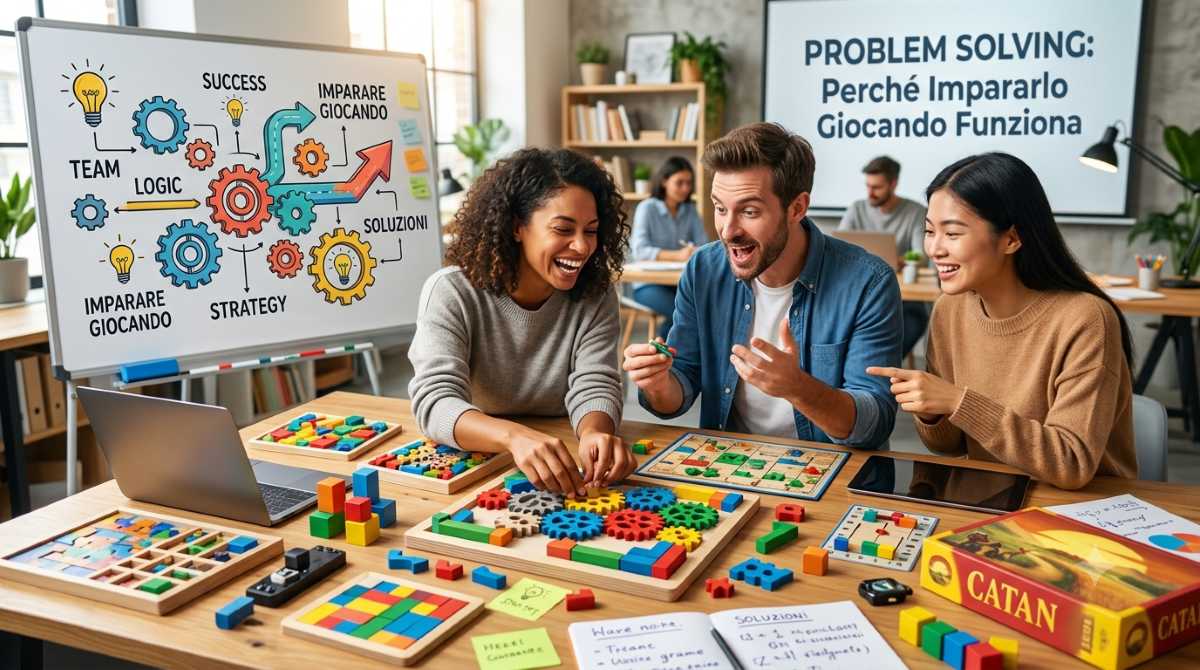
Problem Solving: why learning it through play works
When a challenge becomes an opportunity for growth
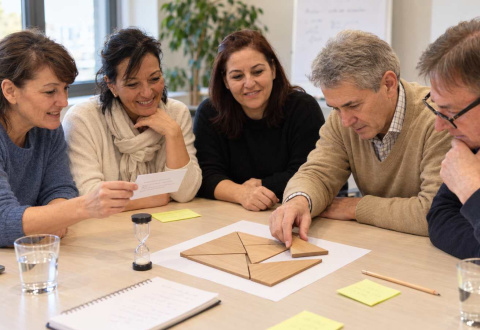
Imagine a team facing a riddle. Time is ticking, information is incomplete, and every decision can make the difference. Someone proposes a solution, another notices a detail that was missed, a colleague connects the clues and, all at once, the puzzle starts to take shape. This isn’t a typical corporate meeting, but a team building activity in the heart of Rome.
It’s precisely in these moments that problem solving is born—one of the most in-demand skills in the modern workplace. And learning it through play is one of the most effective ways to turn theory and experience into tangible results.
Why problem solving is essential in companies
Every organization faces problems to solve every day: fast decisions, sudden changes, managing priorities, and cross-department collaboration. The difference between a group of people and a well-knit team lies in the ability to handle these situations with structure, creativity, and a collaborative spirit.
Experiential activities make it possible to simulate realistic scenarios without the pressures of the work environment, giving participants the chance to try out new strategies and highlight the contribution of each group member.
Why learning it through play really works
The brain learns best through experience
Neuroscience and learning psychology show that people remember more easily what they experience firsthand than what they hear in a theoretical lesson. When games involve emotions, collaboration, and shared goals, the brain forms deeper and longer-lasting connections.
During a treasure hunt, an investigative activity, or a team challenge, each participant is asked to analyze information, make decisions, and compare ideas with others. The result is natural learning that can be easily transferred to everyday work life.
Rome: the perfect city to train problem solving
Rome offers a unique setting where history, culture, and play come together. Its squares and monuments become the ideal stage for activities that stimulate ingenuity and collaboration.
Picture your team searching for a clue in front of the Colosseum, while spotting the hidden details of the Pantheon, crossing the Imperial Forums, solving a riddle in Piazza Navona, or following a trail through the lanes of Trastevere. Every place tells a story, and every mission requires listening, communication, and the ability to find solutions together.
Rome isn’t just the backdrop for the activity: it becomes an integral part of the experience.
What you’ll discover
During an activity focused on problem solving, you can:
-
take on challenges that stimulate logical and creative thinking;
-
improve communication within the group;
-
learn to make decisions quickly;
-
see Rome’s monuments from a new perspective;
-
discover curiosities and anecdotes about iconic places in the Eternal City;
-
experience how collaboration is the real engine of success.
A lesson drawn from history
Rome’s history is full of examples of problem solving. Roman engineers built aqueducts, bridges, and roads that still amaze today for their precision and durability. Behind every great work there were people with different skills, united by a common goal and by the ability to find innovative solutions.
The same principle applies today in companies: the best results come when people share ideas, compare perspectives, and turn difficulties into opportunities.
From the experts’ point of view
Modern corporate training methodologies, supported by research in organizational psychology and experiential learning, highlight how active involvement fosters the development of transferable (soft skills) such as communication, leadership, time management, and problem solving. Learning by doing helps consolidate knowledge through direct experience, increasing motivation and the level of participation.
The skills your team will develop
Collaboration
Share information and work toward a common goal.
Effective communication
Listen, discuss, and make decisions together.
Distributed leadership
Each participant can lead the group at the most appropriate moment.
Creativity
Identify innovative solutions even when facing complex problems.
Time management
Organize activities while respecting timeframes and priorities.
Conclusion
Problem solving isn’t taught only through manuals and presentations. It’s built through experiences that involve the mind, emotions, and relationships.
A challenge among Rome’s wonders becomes much more than a simple game: it’s an opportunity to grow as individuals and as a team, learning that the best solutions always come from collaboration.
For this reason, team building is one of the most effective tools for developing skills that truly make a difference in the workplace.