





























Night of the Gladiators: a corporate cohesion format and evening strategy games
When the sun sets over Rome, the city changes its face.
The great squares slowly empty out, the stones of the monuments take on warmer tones, and the lights begin to sketch a new city. That’s when Rome becomes something different: no longer just a destination to visit, but an immense stage on which to build experiences.
Imagine a group of colleagues, after a day of meetings, leaving behind computers, presentations, and meeting rooms.
For a few hours, offices, departments, and org charts no longer exist.
There are teams.
Missions.
Strategies.
Decisions to make.
And a shared goal to achieve.
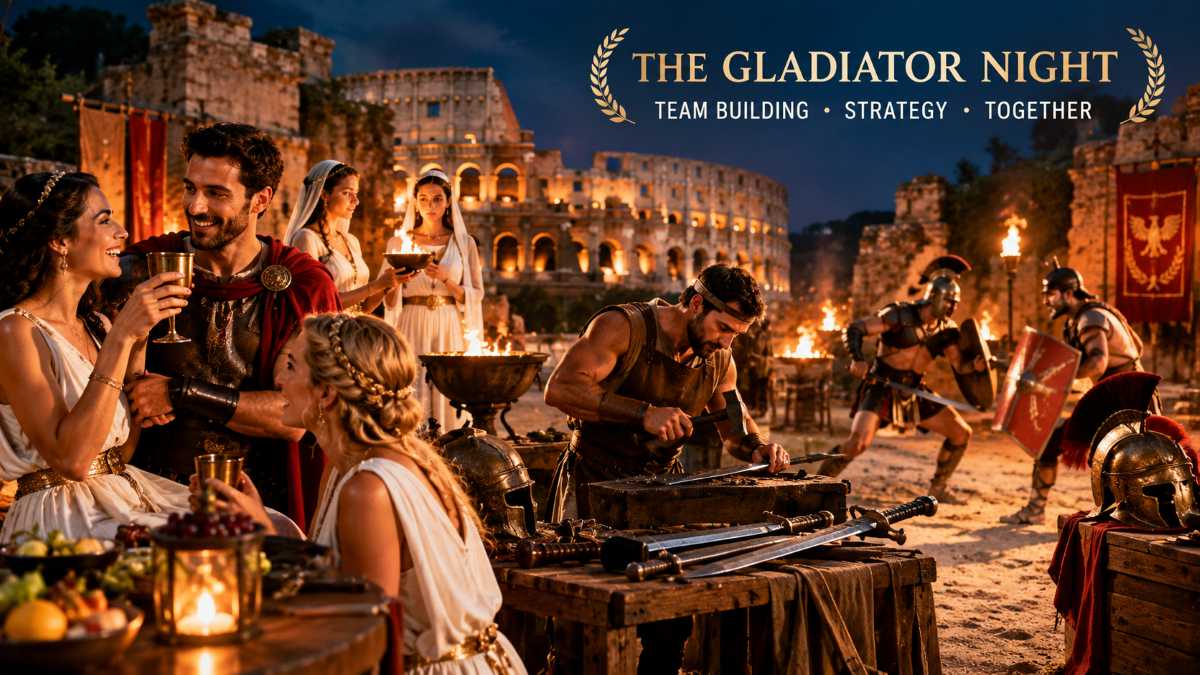
That’s how Night of the Gladiators is born: an original evening team building in Rome format that takes inspiration from the imagery of Ancient Rome, turning it into a contemporary experience dedicated to corporate cohesion, collaboration, communication, and problem solving.
The starting point is one of the most iconic places in the world: the Colosseum and the Archaeological Park of the Colosseum.
But this time, the real arena isn’t made of sand and stone.
It’s the team.
And the real challenge isn’t to fight each other.
It’s about understanding how different people can combine skills, ideas, and strategies to achieve a common result.
From Ancient Rome to Modern Team Building: the gladiators’ metaphor
The allure of gladiators spans the centuries because it tells far more than a simple challenge.
Behind the entrance to the arena there were preparation, discipline, organization, and training.
One of the most important places linked to this world was the Ludus Magnus, the great gladiator school located near the Colosseum.
The Archaeological Park of the Colosseum tells the relationship between the Colosseum and the Ludus Magnus, explaining how the latter was the most important and best-known among the buildings intended for gladiator preparation.
And that’s exactly where the perfect metaphor for the corporate world comes from.
Before a great performance, there is always preparation.
Before a result, there is a strategy.
Before a victory, there is a team that has learned how to function.
A company, just like a group committed to a major challenge, needs:
-
communication;
-
coordination;
-
trust;
-
decision-making ability;
-
leadership;
-
adaptability;
-
information management;
-
collaboration.
So Night of the Gladiators uses historical imagery as a narrative tool.
It doesn’t offer a simple reenactment.
Instead, the world of Ancient Rome becomes the language through which to build modern, safe, and inclusive business games.
Rome at night: when the city becomes part of the game
Few cities in the world can offer a natural setting comparable to Rome.
The Colosseum, the Roman Forum, the Palatine Hill, the Arch of Constantine, and the Circus Maximus tell a story that can become an integral part of a corporate event.
The city isn’t just a backdrop.
It becomes part of the storytelling.
Teams can symbolically travel through Ancient Rome via riddles, missions, observation games, and strategic challenges.
Every place can suggest a question.
Every monument can hide a clue.
Every detail can turn into a challenge.
The Colosseum: the metaphor of the big performance
The Colosseum is the universal symbol of the challenge.
For a modern team building format, however, its meaning can be reinterpreted.
Every company, sooner or later, faces its moment in the arena.
An important presentation.
A commercial competition.
A complex project.
A negotiation.
An organizational change.
In those moments, talent alone isn’t enough.
Preparation is needed.
Coordination is needed.
Pressure-management capability is needed.
The story of the Colosseum and its archaeological areas therefore becomes a narrative reference for talking about performance and teamwork.
The Ludus Magnus: before the challenge comes preparation
The name Ludus Magnus literally means “Great School.”
And perhaps this is one of the most interesting aspects for turning history into a corporate metaphor.
The Ludus was the place of preparation.
Before the show.
Before the performance.
Before the big challenge.
The Archaeological Park of the Colosseum has devoted an important in-depth look to the theme “Gladiators in the Arena. Between the Colosseum and Ludus Magnus,” reconstructing the historical link between the arena and the spaces dedicated to gladiator preparation.
Something very similar happens in business.
Before achieving a result, a team must learn to know each other.
It must figure out how to communicate.
It must recognize people’s skills.
It must learn to trust.
Night of the Gladiators starts precisely from this idea.
A group doesn’t become a team just because it works in the same office.
It becomes a team when people learn to coordinate.
How does the “Night of the Gladiators” format work?
The experience can be customized based on the number of participants, the company’s objectives, and the type of event.
The format can be developed as a real story.
The evening begins.
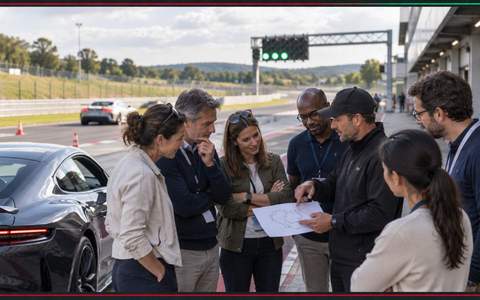
The teams receive their mission.
Time starts running.
And strategy becomes essential.
Entering the Ludus: the team is formed
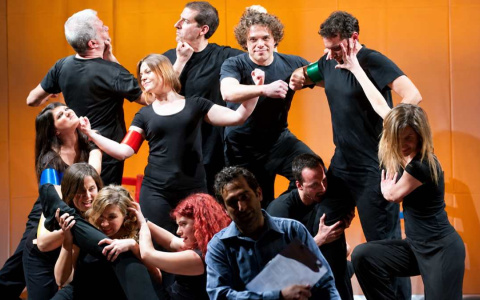
At the beginning of the experience, participants are divided into teams.
Each team can choose:
-
a name;
-
a symbol;
-
a color;
-
a banner;
-
a phrase that represents their identity.
It’s the first moment of discussion.
It looks like a simple creative activity.
In reality, it’s already a test.
Who takes the initiative?
Who listens?
Who tries to involve the others?
Who comes up with an original idea?
The team starts building itself even before the big challenges begin.
Trials of Night of the Gladiators: strategy, logic, and collaboration
The core of the format is a series of challenges designed to engage different skills.
The fastest participant doesn’t necessarily win.
The person who talks the loudest doesn’t win either.
Winning belongs to the team that can make the best use of its resources.
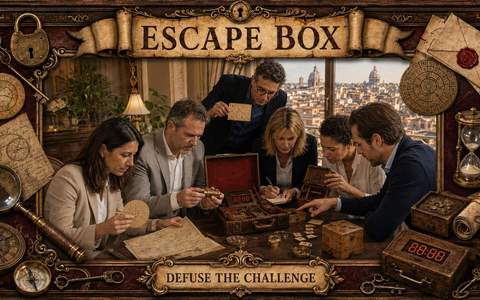
The Eagle’s Strategy
Each team must complete a mission.
The problem is that the information needed is spread across different members of the group.
No one has all the answers.
To reach the goal, you must share information.
Listen.
Verify.
Build a strategy together.
It’s a perfect metaphor for modern organizations.
When information stays locked within individual departments, the process slows down.
When it’s shared, the team becomes more effective.
The Council of the Legionaries
A challenge dedicated to decision-making ability.
Each team receives a complex scenario.
Time is limited.
Resources aren’t infinite.
Information is incomplete.
Decisions must be made.
The challenge is to find a balance between speed and analysis.
The group must understand:
-
which information is truly important;
-
who needs to make the decision;
-
when it’s necessary to change strategy;
-
and when, instead, you need to stay on course.
It’s one of the most effective challenges for building leadership and decision-making.
The Code of the Forum
The Roman Forum has been, for centuries, one of the great centers of public life in Ancient Rome.
Politics, commerce, religion, and social life met in this extraordinary space.
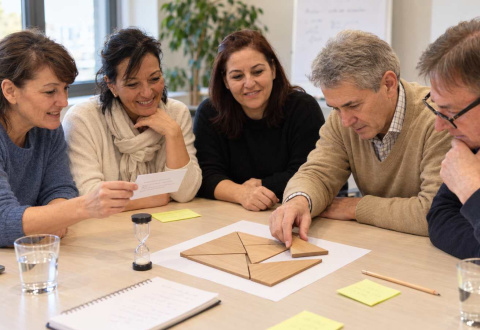
In a corporate format, it can become the inspiration for a problem solving challenge.
Codes.
Riddles.
Clues.
Information that seems unrelated at first.
Teams must observe, reason, and build connections.
The solution never belongs to just one person.
It’s the result of collaboration.
The Challenge of the Banners
Each team receives materials and tools to create its own symbol.
But it’s not enough to create something beautiful.
The banner must tell the team’s strategy.
It must represent:
-
values;
-
strengths;
-
goals;
-
identity.
At the end of the challenge, each group presents its project.
It’s an activity that combines:
-
creativity;
-
communication;
-
public speaking;
-
ability to synthesize.
Night changes the team dynamics
There’s an important difference between an activity organized during a normal work day and an evening experience.
At night, Rome changes atmosphere.
And often, the people change too.
The quietest colleague can become the best strategist.
A person who’s normally used to following can discover leadership abilities.
Someone in a managerial position can experience how important listening is.
The game temporarily changes the rules.
And when the rules change, skills that normally remain hidden can emerge.
Outside the office, new perspectives emerge
At work, we often get to know people through their role.
Head.
Manager.
Junior.
Sales.
Technical.
In Team Building, on the other hand, professional role temporarily takes a back seat.
In front of a riddle, the title on the business card doesn’t matter.
The idea does.
In front of a strategic challenge, the department you belong to doesn’t matter.
What matters is your ability to contribute.
This is one of the great values of experiential activities.
It allows people to look at themselves from a different perspective.
The Rome Gladiator School and a corporate experience inspired by Ancient Rome
To make the format even more immersive, Rome offers specialized realities dedicated to storytelling and reenactment of Ancient Rome.
Among these, the Rome Gladiator School by the Gruppo Storico Romano is one of the best-known references for experiences dedicated to the world of gladiators.
The facility, located along Via Appia Antica, also includes a section dedicated to Team Building for companies, incentives, and groups.
According to the information published directly by the facility, activities can be organized for large corporate groups, with games and skill challenges inspired by Ancient Rome, and with the possibility of customizing the experience.
This type of collaboration can be particularly interesting for enriching a format with:
-
costumed performers;
-
historical storytelling;
-
challenges inspired by Ancient Rome;
-
sets and scenery;
-
spectacular moments;
-
symbolic awards;
-
activities dedicated to corporate groups.
Of course, the goal must remain that of Team Building: collaboration, engagement, and participation.
From the game to conviviality: the final banquet
Every great experience needs a concluding moment.
After missions, strategies, and challenges, the time comes to lower the tension.
Competition makes room for conviviality.
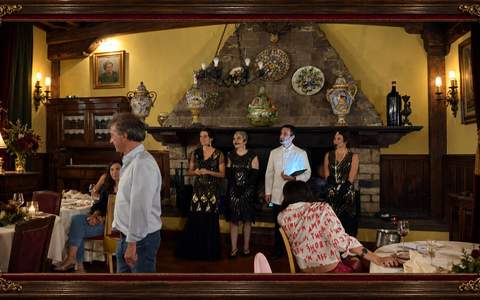
Night of the Gladiators can end with:
-
an aperitif;
-
a company dinner;
-
an awards ceremony;
-
music;
-
entertainment moments;
-
team photos.
It’s often during this phase that something important happens.
People start telling the story of the experience.
“Do you remember when we completely got the strategy wrong?”
“We thought the answer was that…”
“She was the one who found the decisive clue!”
The game is over.
But the story continues.
And that’s one of the most important objectives of a corporate event:
Creating a shared memory.
Circus Maximus: the great metaphor of competition
Another extraordinary reference for Roman storytelling is the Circus Maximus.
Its history evokes the world of competition, entertainment, and collective participation.
Within a corporate format, it can become an interesting metaphor.
Competition can be useful.
It can increase engagement.
It can make the game more emotional.
But it must have one fundamental rule.
Competition must strengthen the group, not divide it.
That’s why, in Night of the Gladiators, the scoreboard represents only part of the experience.
The real result is building a team that’s more aware of its own dynamics.
Final awards ceremony: the triumph of the team
At the end of the challenges, it’s time for the rankings.
But the awards shouldn’t be limited to first place.
It’s possible to create dedicated recognitions for different qualities that emerged during the experience.
La Corona d’Alloro
For the winning team of the evening.
The Eagle of Strategy
For the team that demonstrated the best planning ability.
The Problem Solver Award
For the smartest or most original solution.
The Team Spirit Award
For the most collaborative group.
The Roman Creativity Award
For the team that created the most original project.
This system makes it possible to highlight different skills.
Because in a real team, there isn’t only one way to be winners.
What skills does Night of the Gladiators develop?
An experiential format can be built around very specific business objectives.
Communication
Teams must share information and listen to different points of view.
Leadership
Participants can alternate in guiding roles.
Problem Solving
Riddles and missions require creativity and analytical ability.
Collaboration
No challenge is designed to be completed effectively by just one person.
Time management
Teams must decide how to use their resources.
Decision-making ability
Some missions require quick choices.
Team Cohesion
The experience creates opportunities to strengthen relationships and mutual trust.
Why choose an evening Team Building in Rome?
An evening event also brings important organizational benefits.
It can be scheduled after:
-
meetings;
-
conventions;
-
workshops;
-
training;
-
company presentations;
-
congresses.
The professional day ends.
But the event continues.
And it’s the change in atmosphere that makes the experience more effective.
Illuminated Rome becomes a natural setting.
References to the Colosseum, the Roman Forum, and the Palatine strengthen the storytelling.
The city enters the narrative.
And a normal corporate event can turn into a memorable experience.
The real lesson of gladiators for the corporate world
When we think of gladiators, we often imagine a single figure in the arena.
But behind every great performance there was a system.
Preparation.
Training.
Organization.
Strategy.
Support.
And that’s the most interesting metaphor for Team Building.
Behind every great business result, it’s never just one person.
There’s a system of relationships.
There’s the person who proposes an idea.
There’s the one who improves it.
There’s the one who makes it happen.
There’s the one who coordinates.
There’s the one who communicates.
There’s the one who solves a problem.
There’s the one who encourages the group during the hardest moments.
Night of the Gladiators tells it all through the game.
The story becomes storytelling.
Storytelling becomes experience.
Experience becomes collaboration.
And for one evening, Rome becomes an arena again.
But this time, victory doesn’t belong to the strongest.
It belongs to the team that has learned how to function together.
FAQ – Night of the Gladiators and evening Team Building in Rome
Does Night of the Gladiators involve real fights?
No. The corporate format is designed as a Team Building experience based on strategy games, collaboration, riddles, creativity, and problem solving. The gladiators’ imagery is used as a narrative and staging element.
Can the format be organized for international companies?
Yes. The activities can be adapted for international groups and designed in multiple languages, making the game accessible to participants from different countries.
How many people can participate?
The format can be customized based on the number of participants. For specific activities inspired by Ancient Rome, it’s also possible to consider specialized realities such as the Rome Gladiator School, which offers programs dedicated to companies, incentives, and groups.
Can you organize a dinner after the Team Building?
Yes. An aperitif, dinner, and awards ceremony are an ideal conclusion to the experience and allow participants to share informally the most fun moments of the evening.
Which areas of Rome can inspire the format?
The Colosseum, the Ludus Magnus, the Roman Forum, the Palatine Hill, the Arch of Constantine, and the Circus Maximus are some of the main historical and narrative references used to build the experience’s storytelling.
Which business skills can be developed?
Communication, leadership, problem solving, collaboration, time management, decision-making ability, and team cohesion.