































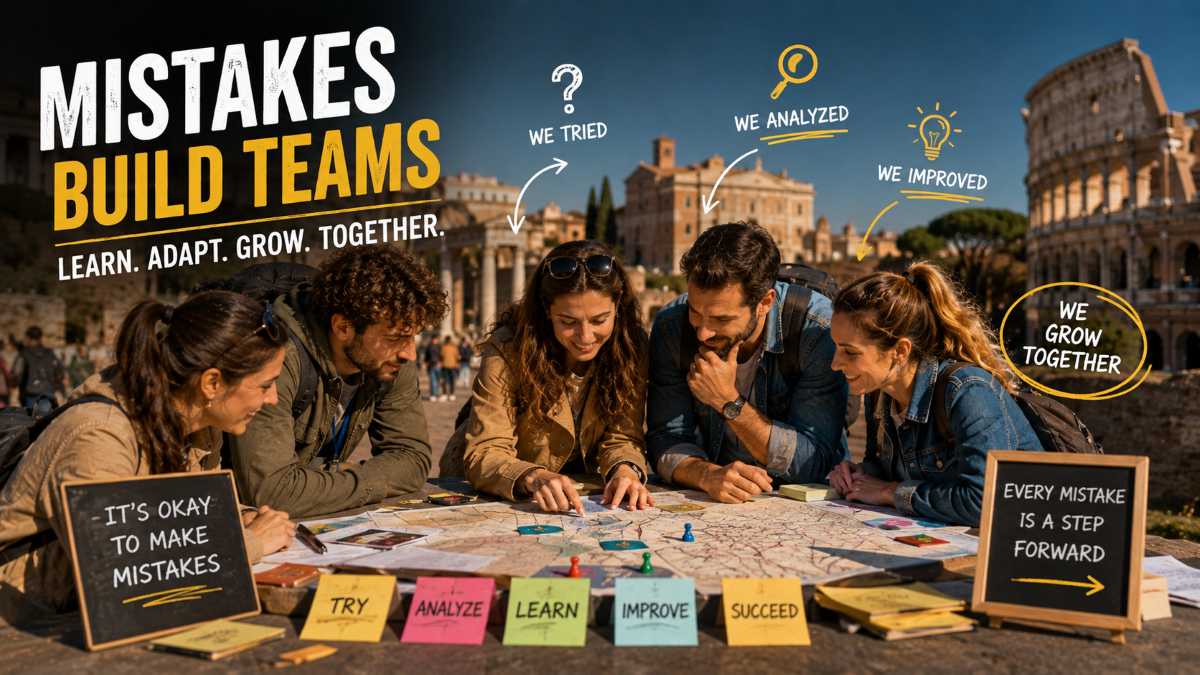
The value of mistakes during an experiential activity
Getting things wrong doesn’t mean failing. In an experiential Team Building, mistakes can become one of the most powerful tools for learning, communicating better, and building a more aware group.
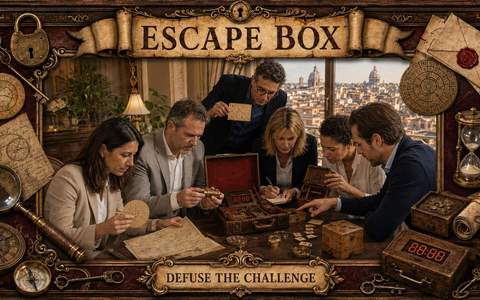
Let’s imagine a team taking on a challenge in the heart of Rome. Time is passing, the instructions aren’t entirely clear, and each participant has their own idea of how to proceed. Someone makes a decision too quickly. The group goes down the wrong path. For a few minutes, it feels like they’ve wasted time.
Then something interesting happens.
Instead of looking for a culprit, participants start asking themselves: Where did we go wrong? Why didn’t we understand each other? What can we do differently?
It’s right at that moment that the game stops being just a game and becomes a learning experience.
The value of mistakes during an experiential activity is, in fact, one of the most interesting aspects of modern Team Building: mistakes allow you to observe dynamics that, in the office, often stay hidden. They show how we communicate under pressure, how we react to difficulties, how we make decisions, and above all how we turn an obstacle into a new opportunity.
Why mistakes are important in Team Building
In many organizations, mistakes are still perceived as something to avoid at all costs. This approach can lead people to be cautious, not put themselves out there, and in some cases prefer silence over suggesting an idea that might be wrong.
An experiential activity, on the other hand, creates a different context.
Here, mistakes have limited consequences, they’re observed, discussed, and used to modify the strategy.
Making mistakes in a protected environment
One of the fundamental features of a good Team Building is the chance to experiment without turning every mistake into a personal evaluation.
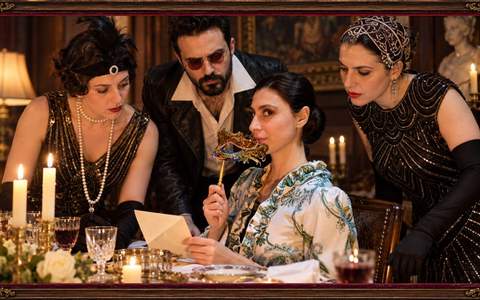
During a treasure hunt, if a team misreads a clue, they aren’t jeopardizing a business project. They’re experimenting with a decision-making process.
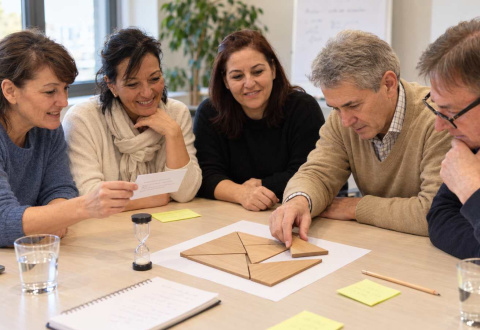
If, during a problem-solving challenge, a solution doesn’t work, the group can analyze the reason and try a different route.
This creates a protected environment, where it becomes easier to try, correct yourself, and try again.
Mistakes make group dynamics visible
A collective mistake can tell you much more than a correct answer.
Who takes command immediately?
Who tends not to intervene?
Who tries to mediate?
Who listens?
Who looks for an alternative solution?
And who, instead, immediately assigns responsibility to someone else?
The experiential activity makes these dynamics observable because it puts people in front of a concrete situation.
From mistakes to learning: the principle of learning by doing
Experiential Team Building is based on the idea that certain skills are understood more deeply when they’re lived directly.
Reading a manual about communication is useful. Talking about collaboration during a meeting is useful. But being faced with a challenge in which the outcome truly depends on the ability to listen to each other is a completely different experience.
Experience creates a learning cycle
We can imagine the process in four phases:
-
Action: the group takes on a challenge.
-
Mistake or result: something works or it doesn’t.
-
Reflection: participants analyze what happened.
-
New strategy: the group changes its behavior and tries again.
It’s the step between experience and reflection that turns a fun activity into a growth opportunity.
Mistakes become feedback
A mistake doesn’t necessarily have to be interpreted as a rejection.
It can be considered feedback on the method used.
If a team can’t complete a challenge, the interesting question isn’t only “who made the mistake?”, but:
“What is this result telling us about the way we worked together?”
This perspective completely changes the meaning of the experience.
Mistakes and communication within the group
One of the most obvious aspects during Team Building activities is the relationship between mistakes and communication.
When everything goes smoothly, communicating seems easy. Difficulties, however, emerge when pressure arrives.
A time limit, a complex instruction, or a resource that needs to be shared can quickly change people’s behavior.
When pressure changes the way people communicate
In a game situation, behaviors very similar to those that happen in professional life can emerge.
Someone talks a lot and listens little.
Another person has a good idea but doesn’t find the space to express it.
A participant may spontaneously take on the role of leader, while another becomes the group’s technical point of reference.
Mistakes can bring these dynamics to light with particular clarity.
Learn to listen before correcting
An effective group isn’t necessarily the one that makes fewer mistakes.
It’s often the one that corrects itself faster.
To do that, you need listening, discussion, and the ability to accept different viewpoints.
When a team understands that the goal isn’t to identify who is responsible for the mistake, but to find a solution, the way people communicate changes too.
When mistakes become a leadership opportunity
Experiential activities are also particularly interesting for observing leadership.
An effective leader isn’t necessarily the person who always finds the correct answer.
In many situations, it’s instead someone who can:
-
stay calm;
-
listen to the group;
-
distribute responsibilities;
-
recognize an error quickly;
-
change the strategy;
-
value others’ skills;
-
build trust even when the solution isn’t yet obvious.
The true leader knows how to say: “We made a mistake”
Admitting a mistake in front of your group requires a certain level of self-awareness.
During a Team Building activity, this dynamic can be observed without the hierarchical structures typical of the business environment.
A participant may discover that asking for help doesn’t reduce their authority.
On the contrary, it may increase it.
Leadership therefore becomes less tied to control and more connected to the ability to guide the group through uncertainty.
Problem solving: why getting things wrong helps find better solutions
Problem solving is one of the skills that can be practiced naturally through play.
An experiential challenge rarely offers only one possible path. It often forces the group to form hypotheses, test them, and adjust them.
The first solution isn’t always the right one
One of the most interesting lessons is understanding that an initial solution doesn’t necessarily have to become a final choice.
A team can start with an idea, test it, and discover that it doesn’t work.
At that point, it can:
abandon it, modify it, or combine it with a new insight.
It’s a mechanism very similar to what happens in creative processes and in the management of complex problems.
Mistakes stimulate flexibility
When a strategy fails, the group must decide whether to keep going down the same path or change approach.
This ability to adapt is especially important in professional contexts characterized by constant change.
A well-designed Team Building therefore doesn’t just teach people how to “win.”
It teaches you how to respond when the initial plan doesn’t work.
Rome as an experiential laboratory
Rome offers a particularly interesting setting for turning the concept of mistakes into experience.
The city allows you to combine play, history, culture, and movement, using its places as an integral part of the challenge.
From the Imperial Forums to the squares of the historic center
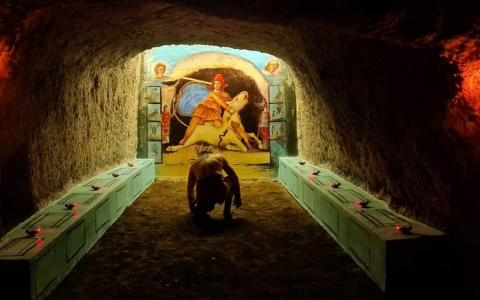
The Imperial Forums can become the backdrop for a challenge focused on collaboration and strategy.
Among monumental ruins, ancient routes, and layers of history, participants can work with clues and evidence that require attention and observational skills.
Even places like the Pantheon, Piazza Navona, Campo de’ Fiori, and Trastevere can become stops in an experience built around problem solving.
The interesting part is that the city itself introduces a variable: not everything is immediately obvious.
You have to observe.
Interpret.
Compare.
And sometimes, take the wrong turn.
A treasure hunt where making mistakes is part of the game
Let’s think of a team that has to reach a specific destination starting from a clue.
The group discusses.
Someone proposes a solution.
The others follow along.
After a few minutes, they realize the direction is wrong.
The first reaction could be frustration.
But that’s exactly where the most interesting part begins.
“Where did we lose the thread?”
The group backtracks and reconstructs the reasoning.
Maybe the clue was interpreted incorrectly.
Maybe someone noticed a detail but wasn’t listened to.
Maybe the team relied too quickly on the opinion of the person considered more experienced.
That mistake then becomes a small snapshot of how the group works.
And most importantly, it allows the team to change its behavior in the next challenge.
Can mistakes strengthen trust?
They can—especially when they’re handled constructively.
A team that experiments with a mistake and discovers it can face it without accusations can develop greater mutual trust.
The message becomes:
“I can make mistakes, and the group will help me find a solution.”
This doesn’t mean normalizing carelessness or ignoring errors.
It means distinguishing between accountability and blame.
Accountability means learning
In an effective Team Building, the goal isn’t to create an environment where nobody makes mistakes.
It’s to create an environment where people can:
-
recognize the mistake;
-
analyze it;
-
take responsibility;
-
listen to others;
-
correct their behavior;
-
turn the experience into learning.
This difference is also fundamental in company culture.
From the game to the office: what remains after Team Building?
The real value of an experiential activity isn’t measured only during the event.
The most important question comes afterward:
“What will we take with us tomorrow?”
If a team has learned that constantly interrupting others slows down the search for a solution, that awareness can be carried over into meetings.
If it has discovered that making decisions without verifying information leads to errors, it can apply the same principle to projects.
If it has understood that asking for help helps you reach the result faster, it can change the way it collaborates.
Debriefing is essential
To turn the experience into learning, it’s important to set aside time for the final debrief.
The group can be guided through a few questions:
-
What happened?
-
What mistake did we make?
-
Why did we make it?
-
How did we react?
-
Who facilitated the solution?
-
Who wasn’t able to express themselves?
-
What could we have done differently?
-
What can we apply to our daily work?
This is where Team Building becomes truly educational.
Not all activities have to be easy
A common mistake when designing a Team Building is to look for activities that are only fun and have no difficulty.
Fun is important, but a meaningful challenge must also include a controlled dose of complexity.
If everything is too easy, the group isn’t forced to change its behavior.
On the other hand, if the difficulty is appropriate to the participants’ characteristics, collaboration, creativity, leadership, and adaptability can emerge.
Difficulty must be designed
So it isn’t about deliberately putting people in difficult situations.
It’s about building scenarios where they can experiment.
A good activity should be complex enough to create discussion, but safe enough to allow people to make mistakes and try again.
That balance is what makes the experience effective.
Mistakes as a tool for innovation
There’s one more particularly interesting aspect.
People who constantly fear making mistakes tend to come up with fewer ideas.
Instead, a group used to seeing mistakes as part of the process can become more willing to experiment.
During a Team Building activity, a solution that seems unusual might not work.
But it could also open a completely new path.
From fear of mistakes to a culture of experimentation
The key shift, then, is cultural.
It doesn’t mean saying:
“Mistakes don’t matter.”
It means saying:
“Every mistake should help us understand something we didn’t know before.”
That’s a substantial difference.
So mistakes become information.
And if that information is shared, it can become knowledge.
Why an experiential Team Building can leave a mark
Shared experiences stay in memory because they involve emotions, actions, relationships, and context at the same time.
A team that remembers taking the wrong turn together, finding an unexpected solution, or overcoming a difficult challenge has something that a simple meeting is unlikely to create: a shared memory.
Rome further amplifies this effect.
A mistake made in front of a monument, a clue solved in a historic square, or a decision made together during a challenge can turn into episodes that people will keep talking about even months later.
And precisely when an experience becomes a shared story, the group starts building its own identity.
From “who made the mistake?” to “what have we learned?”
It’s perhaps this question that best summarizes the value of mistakes during an experiential activity.
A Team Building shouldn’t just show how effective a team already is.
It should also help it discover how to become more effective.
So making mistakes isn’t necessarily a step back.
It can be the moment when the group stops, looks at what happened, and decides to change direction.
Just like during a treasure hunt through the streets of Rome: sometimes the most interesting route isn’t the one we planned.
It’s the one we discover after realizing we took the wrong one.
If you want to live this experience or something similar, click here; you’ll find our proposals:
Request a free quote and receive all the information about your Team Building experience.
To request a quote and receive all the information about the experience best suited to your group: request a quote