


































The Surprise Effect in Team Building: Why the Unexpected Can Truly Bring a Team Together
An unexpected message. A challenge no one had anticipated. An unfamiliar place. A sudden change of rules. Or simply an activity that can break the routine and take people outside their usual patterns.
In Team Building, surprise is not just a spectacular element: it can become a design tool for stimulating attention, collaboration, creativity, and adaptability.
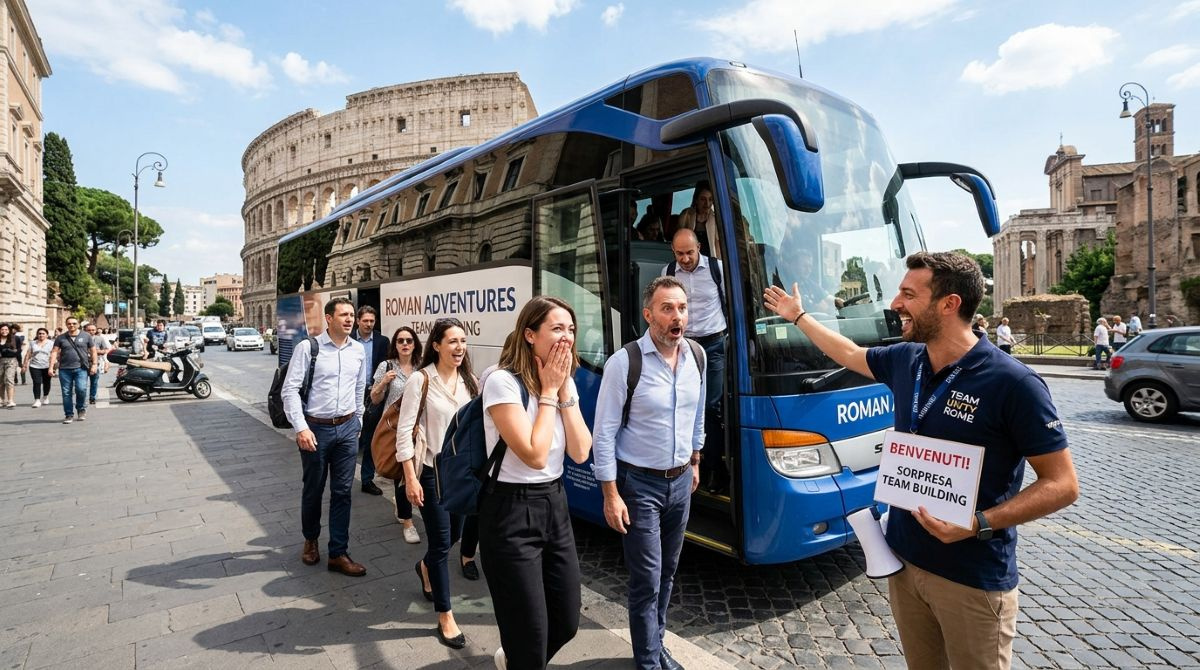
Imagine a team arriving in Rome expecting to take part in a regular corporate activity. The participants are expecting an organized day, perhaps a tour, a dinner, or a game. Then they receive an envelope. Inside is a map, a photograph, and a single instruction: "You have 90 minutes. You’ll discover the rest along the way."
At that moment, something changes.
People start looking at one another, asking questions, and coming up with theories. Someone who normally takes little initiative suggests a solution. Someone who tends to coordinate the group has to learn to listen. And someone who knows the city well suddenly becomes a valuable resource.
This is the power of the surprise effect in Team Building: creating a situation that is new enough to change the group’s usual dynamics, at least temporarily.
What is the surprise effect in Team Building?
The surprise effect comes from introducing an unexpected, new, or not entirely predictable element into the experience.
It doesn’t necessarily mean organizing something extreme or spectacular. The surprise can also be very simple:
-
a destination revealed only at the last moment;
-
a challenge that appears during a treasure hunt;
-
a change of role;
-
a character who enters the scene;
-
a hidden message;
-
an apparently impossible challenge;
-
an unexpected reward;
-
a new rule introduced during the game.
The key difference is that the surprise must have meaning within the activity.
Surprise doesn’t mean improvisation
Effective Team Building should not be left to chance.
Behind a surprising experience there should be careful planning: objectives, timing, difficulty, collaboration methods, and opportunities for reflection should all be thought through in advance.
So the surprise is what the participant doesn’t know, not what the organizer hasn’t prepared.
Why does surprise increase engagement?
When a situation breaks the routine, attention naturally shifts.
Think of the difference between attending a corporate meeting in the same office every time and instead finding yourself in front of the Colosseum with a sealed envelope to open.
The second scenario contains an implicit question:
"What will happen now?"
This question is a powerful narrative tool.
Curiosity gets the group moving
Curiosity leads people to look for information, compare ideas, and share what they know.
In a Team Building activity, this means turning the participant from a mere spectator into the protagonist of the experience.
It’s no longer: "What do we have to do?"
but: "What do you think this clue means?"
It’s a small change in wording, but an important one in terms of group dynamics.
Surprise breaks habitual roles
One of the challenges for teams that have worked together for a long time is that roles become fixed.
There’s the one who organizes.
There’s the one who decides.
There’s the one who carries things out.
There’s the one who observes.
There’s the one who talks a lot.
And there’s the one who prefers to stay in the background.
A surprising activity can temporarily shift this balance.
When the setting changes, behavior changes too
Imagine a treasure hunt in the historic center of Rome.
The group is following a specific strategy when it receives a new message:
"From now on, the navigator is not allowed to speak."
Suddenly, the participant who knew exactly where to go can no longer guide the others verbally.
The group has to find a new way to communicate.
This kind of surprise makes it possible to observe aspects that rarely emerge during a normal workday:
-
listening skills;
-
leadership;
-
handling pressure;
-
nonverbal communication;
-
flexibility;
-
mutual trust;
-
decision-making skills.
Rome: the ideal city for creating surprising experiences
Rome offers a particularly interesting feature for Team Building: the city itself can become part of the game.
Every street can hide a clue, every square can become a stop, and every monument can provide the backdrop for a challenge.
From the Colosseum to the Imperial Forums
A team could start the activity near the Colosseum without knowing where they’ll go next.
From there, the clues could lead to the Imperial Forums, turning the city route into a real story.
Rome’s history then becomes something to experience, not just observe.
Trastevere and the charm of the unexpected
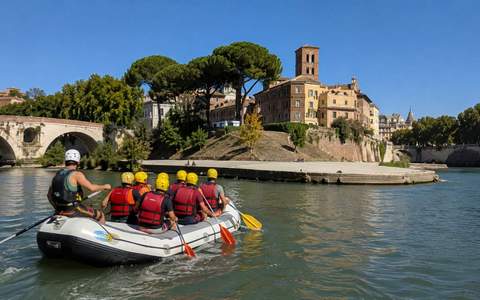
Trastevere is also particularly well suited to this kind of experience.
Alleys, squares, shops, fountains, and picturesque views make it possible to create less predictable routes.
The group might receive a partial photograph, an architectural detail, or an enigmatic phrase and be tasked with figuring out where to go.
The surprise comes from the fact that the destination isn’t simply revealed: it has to be discovered.
The surprise effect and creativity
Surprise is closely linked to creativity because it forces the group to consider possibilities other than those initially anticipated.
An unexpected rule can lead to new solutions
During an experiential activity, introducing a small change can be enough.
For example:
"You’ve found the solution, but you can’t use it."
The team has to start over.
The first reaction might be frustration. But that very situation can lead to a second level of problem-solving.
Participants are forced to:
-
stop;
-
analyze what happened;
-
identify the mistake;
-
change their strategy;
-
try an alternative solution.
This dynamic is particularly interesting because it brings the game experience closer to a real-life work situation.
Surprise as a way to practice flexibility
Conditions are constantly changing in the professional world.
A client changes a request.
A project is delayed.
A key person is unavailable.
A strategy doesn’t deliver the expected results.
So the ability to adapt isn’t just about knowing what to do when everything goes according to plan.
It also means knowing what to do when the plan changes.
Team Building can simulate the unexpected
A well-designed activity can introduce controlled changes to see how the team responds.
The point isn’t to put people in difficult situations for no reason.
The goal is to create a safe enough situation for participants to experience:
"This wasn’t planned. What do we do now?"
This seemingly ordinary question can become one of the most interesting moments of the entire experience.
Surprise also makes the experience more memorable
A corporate day risks being forgotten if it feels like a series of activities people have already seen.
An experience that includes an unexpected element, on the other hand, tends to stand out in people’s memories.
Think of two photographs.
In the first, a group of colleagues pose in front of a monument.
In the second, the same group laughs while trying to solve a puzzle they found in a mysterious envelope, with the Pantheon in the background.
The second image tells a story.
And it’s the story that makes the experience easier to remember.
Surprise isn’t enough: you have to create meaning
This is one of the most important aspects of designing a Team Building activity.
A surprise for its own sake can be fun, but it doesn’t necessarily create value.
The surprise must align with the objective
If the activity’s goal is to improve communication, the surprise could require a change in communication style.
If the aim is to work on problem-solving, an unexpected obstacle could be introduced for the team to resolve.
If the goal is to develop leadership, roles can be changed.
If, on the other hand, the goal is simply to encourage social interaction, surprise can be used primarily as a storytelling element.
The objective comes first. The surprise comes next.
Some ideas for using the surprise effect
1. The secret destination
Participants know the meeting point, but not the final destination.
Along the way, they receive small clues.
This is a particularly effective option for events in Rome because it makes the journey an integral part of the experience.
2. The mysterious message
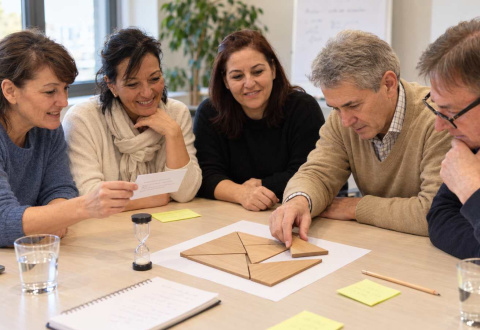
Each team receives an envelope containing a photograph, a phrase, or a code.
The solution leads to the next challenge.
3. The change of role
Halfway through the activity, each participant receives a new role.
The person who was leading has to learn to follow.
The person who was observing has to make decisions.
The person who was coordinating has to make room for others.
4. The controlled unexpected event
Just when the group thinks it has completed the challenge, a new condition appears.
It’s not an organizational mistake: it’s part of the challenge.
5. The final surprise
The experience can end with something the participants weren’t expecting: a special dinner, an exclusive location, a performance, a tasting, or a final challenge.
The final surprise then becomes the climax of the story.
The facilitator’s role: surprising without disorienting
The surprise effect needs to be managed carefully.
A good facilitator constantly observes the group and understands when to increase the difficulty and when it’s necessary to slow things down.
Surprise should create energy, not anxiety
An effective challenge should encourage people to step outside their usual comfort zone without making them feel abandoned.
That’s why it’s important to distinguish between:
positive surprise → "I wasn’t expecting that—how wonderful!"
frustrating unexpected event → "I don’t understand what’s going on."
The difference lies mainly in the planning and communication.
From the game to learning: the debrief
A Team Building activity doesn’t necessarily end when the game ends.
In fact, the most important moment often comes afterward.
What did we discover?
The facilitator can ask the group:
-
Who took the initiative?
-
How did you make decisions?
-
How did you react when the situation changed?
-
Did you listen to everyone’s ideas?
-
What happened when the first strategy didn’t work?
-
Which behavior might also be useful in the office?
These questions turn a simple, fun activity into a learning experience.
So the value of the surprise effect lies not only in the moment when something unexpected happens.
It lies above all in what the group understands after experiencing it.
Team Building in Rome: when the unexpected becomes part of the experience
Rome offers an extraordinary setting for this approach.
A route could cross the Imperial Forums, continue toward the Pantheon, weave through the urban fabric of Trastevere, or explore lesser-known places.
The city makes it possible to play with three essential ingredients:
History
Participants don’t simply visit a place: they have to interpret it, read it, and use it to achieve an objective.
Space
Distances, squares, alleys, and landmarks can all become elements of the challenge.
Storytelling
Every activity can have a plot: a mission, a mystery, a challenge, a search, or a story to complete.
And this is exactly where Team Building stops being a simple break from everyday life and becomes an experience to remember.
Why choose the surprise effect for corporate Team Building?
The surprise effect can be particularly effective when a company wants to:
-
increase participant engagement;
-
break habitual dynamics;
-
stimulate creativity and problem-solving;
-
work on flexibility;
-
encourage more spontaneous communication;
-
create a memorable experience;
-
strengthen a sense of belonging;
-
make the most of a location like Rome;
-
turn an ordinary corporate day into a story to tell.
The point, however, isn’t to surprise people more.
It’s to surprise them better.
A small change introduced at the right moment can be much more effective than an expensive spectacle disconnected from the group’s objectives.
The real surprise? Discovering how your team works
At the end of an experiential activity, the most interesting surprise often isn’t the one prepared by the organizers.
It’s the one that has to do with the people.
The colleague who never spoke takes the initiative.
The person considered the most rational demonstrates great creativity.
The natural leader learns to delegate.
The group that seemed disorganized finds an effective strategy precisely when everything changes.
And this is where the surprise effect truly becomes a Team Building tool.
Because when we take people away from their habits, roles, and daily routines for a few hours, we can see something that often remains hidden in the office:
how a team responds when it doesn’t know exactly what will happen next.
And perhaps this is the most important surprise of all.