




























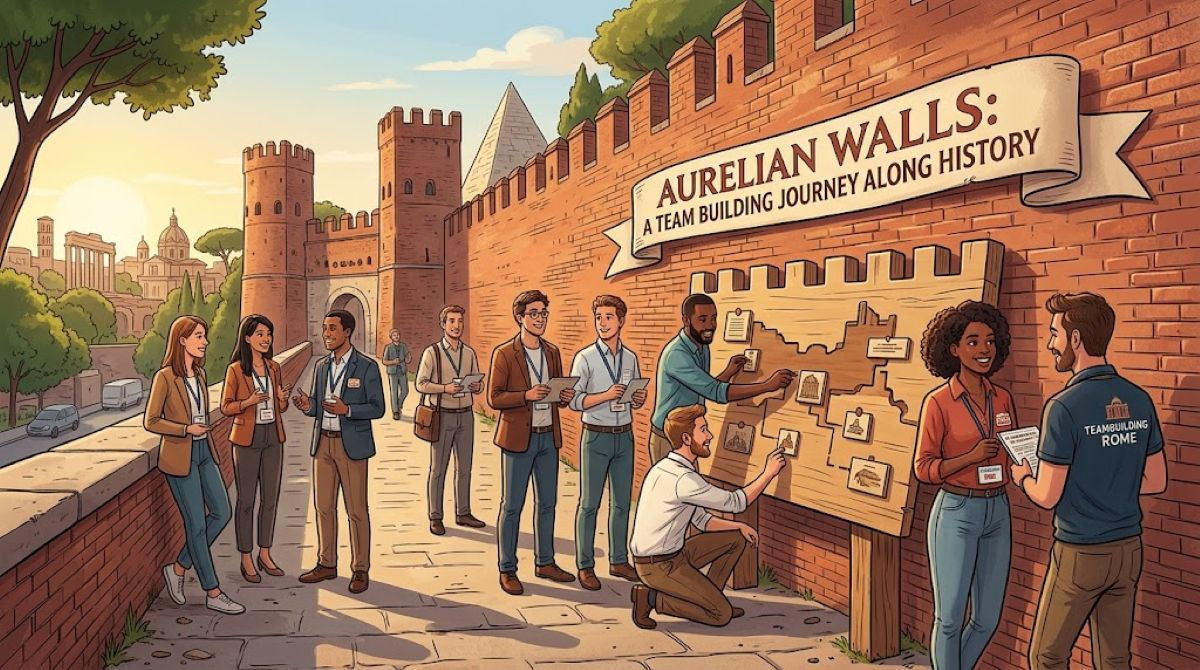
The Aurelian Walls: a Team Building through history
On the horizon of Rome, not only domes and marble heroes stand out; an invisible but imposing line runs through the heart of the Empire for centuries. These are the Aurelian Walls: over 12 kilometers of brick and stone fortifications, silent witnesses to strategies, cooperation, and resilience.
In today’s corporate world, where challenges change at high speed, the ability to build solid defenses, communicate across departments, and protect your vision is as essential as it was for ancient Romans. A format of Team Building along the Aurelian Walls is the perfect synthesis between an urban adventure, immersive storytelling, and the development of group dynamics.
Beyond the Classic Urban Trekking: the Empire’s Storytelling in Motion
This is not a simple guided walk or a passive tourist tour. Our proposal turns the Capital’s defensive perimeter into a majestic arena of gamification and problem solving for corporate teams.
"Rome, 3rd century A.D.: Emperor Aurelian understands that the greatness of the Empire lies in the ability to unite and protect. Every centuria, every group of builders and defenders must operate in perfect coordination. Today, your team is called to take up that same legacy."
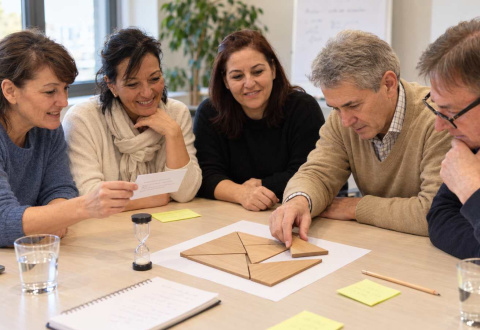
Participants become the protagonists of a strategic treasure hunt or a staged Urban Orienteering experience. Divided into competitive but interconnected teams, they will have to interpret period maps, decode hidden codes among monumental gates, and overcome tests of leadership and creativity to complete the “defense of the Eternal City”.
Points of Interest (POI) along the route: between Archaeology and Strategy
The Team Building route touches some of Rome’s most fascinating Points of Interest, rich in history, turning them into real strategic test stations:
1. Porta Sebastiana and the Walls Museum (The Strategic Outpost)
One of the best-preserved gates in the entire wall ring. Here teams face their first challenge: the test on tactical planning and resource allocation. Climbing onto the towers and walking the patrol walkways gives participants an overview (a bird's-eye view), the ideal metaphor for business planning.
2. Pyramid of Cestius and Porta San Paolo (The Enigma of Convergence)
A compelling corner where imperial Rome meets Egyptian-inspired echoes. Near Porta San Paolo, groups carry out tests of cross-functional communication, decoding coded messages and linking the goals of individual departments to those of the organization as a whole.
3. Porta Maggiore and the Claudian Aqueduct (Team Engineering)
A masterpiece of Roman engineering where the walls intercept monumental water channels. In this stop, participants test their skills in collaborative problem solving and operational coordination, learning how integrating complex systems is the key to business success.
4. Castro Pretorio and Porta Pinciana (The Group’s Resilience)
Through still-imposing stretches and scenic views near Villa Borghese, participants face the final challenge focused on change management and the ability to adapt quickly in the face of unexpected market events.
Why choose a Team Building on the Aurelian Walls?
The evolution of Team Building formats calls for authentic experiences, high cultural value, and those capable of creating real emotional and relational impact. This route offers:
-
Experiential Learning (Experiential Learning): The concepts of brand protection, corporate resilience, and teamwork are absorbed through play and exploration.
-
Inclusivity and Sustainability: A zero-impact outdoor activity, suitable for everyone and customizable for national and international corporate groups.
-
Valuing the Heritage: Rome becomes a unique training scenario in the world, capable of inspiring a sense of belonging and pride.
If you want to experience this or other similar ones, click here; you’ll find our proposals:
Request a free quote and get all the information about your Team Building experience.