
































Team Building for small businesses: effective ideas to create a more united group
You don’t need a hundred people, a big stage, or a complicated program to have a memorable Team Building experience.
Sometimes twelve colleagues are enough, along with a challenge to solve, a city to explore, and a seemingly simple question: will we manage it together?
It’s precisely in small businesses that Team Building can take on particularly interesting value. People often work in close contact, sharing every day decisions, problems, successes, and unexpected events. Relationships are more direct, but for that very reason, internal dynamics can also become more noticeable.
A misunderstanding doesn’t stay hidden for long.
A good idea can quickly turn into a project.
A particularly motivated person can positively influence the entire group.
That’s why organizing Team Building for small businesses doesn’t just mean “doing something outside the office.” It means creating a different space where people can observe how they collaborate, communicate, and tackle challenges.
Rome, with its neighborhoods, squares, and ability to surprise at every corner, also offers an ideal setting for building effective experiences even for small teams.
Why is Team Building important even in small businesses?
There’s a rather common idea: Team Building is useful mainly for large companies, with hundreds of employees and departments that work separately.
In reality, even a small team may need to stop and look at things from a different perspective.
In fact, in smaller organizations, every relationship can carry even more weight.
If someone communicates poorly, the whole group can be affected.
If trust is missing, decisions can slow down.
If someone tends not to be listened to, the company risks losing valuable ideas and skills.
A well-designed Team Building experience can help work on some key aspects:
-
communication;
-
listening;
-
mutual trust;
-
problem solving;
-
collaboration;
-
time management;
-
creativity;
-
the ability to make decisions together.
Small team, big impact
In a group of ten or fifteen people, it’s hard to “hide.”
During a challenge, everyone has more opportunities to participate. Every choice becomes visible, every idea can be heard, and each participant can contribute meaningfully to the result.
This makes Team Building especially interesting for small businesses.
The goal isn’t to create a huge event, but to design an experience sized to the group.
An overly scattered activity can make people lose the point of the meeting.
A well-calibrated challenge, on the other hand, can involve everyone.
The best Team Building ideas for small groups
Choosing the activity should start with a question: what do we want to improve or stimulate within the team?
A group that needs to work on communication will have different needs from a team that simply wants to celebrate a result or strengthen relationships between colleagues.
For that reason, there isn’t one single perfect activity.
There are experiences that are better suited to specific goals.
1. Treasure hunt in Rome: the city becomes the playground
One of the most effective solutions for a small group is an urban treasure hunt.
Rome offers a truly natural setting for this kind of experience.
Teams can move between iconic locations, solve riddles, complete missions, and discover details that often even escape people who live or work in the city for years.
A route can pass through some of the most suggestive POIs, such as:
-
the Pantheon;
-
Piazza Navona;
-
Campo de’ Fiori;
-
Trevi Fountain;
-
Spanish Steps;
-
the Roman Forum;
-
the area of the Imperial Fora.
Why it works with a small team?
Because each participant can have a role.
There’s someone who observes best.
Someone who’s quicker at spotting connections.
Someone who’s good at reading a map.
Someone who can stay calm when time is tight.
A treasure hunt lets these differences emerge naturally.
And often, that’s exactly the most interesting part: discovering skills that remain invisible in normal work routines.
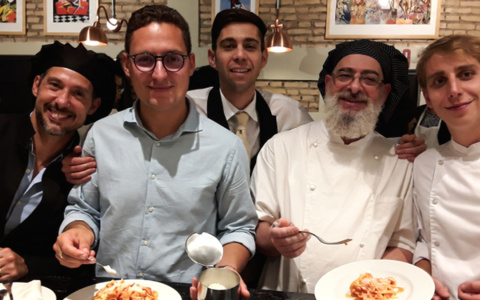
2. Cooking Team Building: collaborating with hands in the dough
For a small group, the kitchen can turn into a workshop for collaboration.
A Cooking Team Building lets participants work together toward a concrete goal: preparing something that everyone can share at the end.
It sounds simple.
Then comes the moment to organize.
Who prepares the ingredients?
Who follows the recipe?
Who manages the timing?
And who decided that amount of salt was “enough”?
That’s where the kitchen starts telling you something about the team.
A perfect activity to break out of the usual routines
In the office, each person tends to have a specific role.
During a culinary experience, however, the dynamics can change completely.
The quieter colleague can prove to be the most organized.
The person who normally leads the group can decide to make room for others.
Someone who doesn’t like public speaking can suddenly become indispensable.
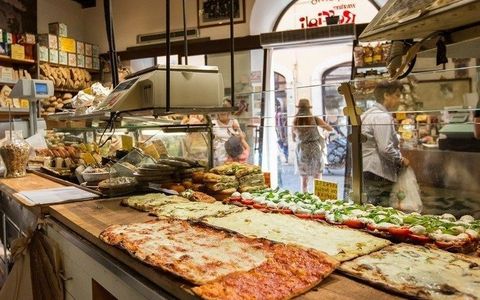
Experiences like Mani in Pasta allow you to experience collaboration through a concrete, creative, and naturally friendly activity.
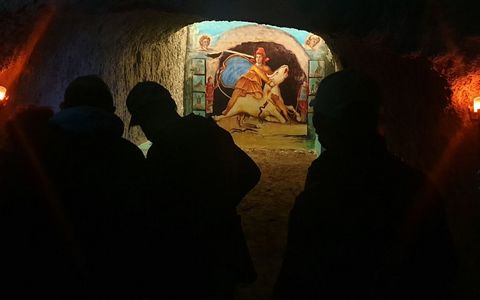
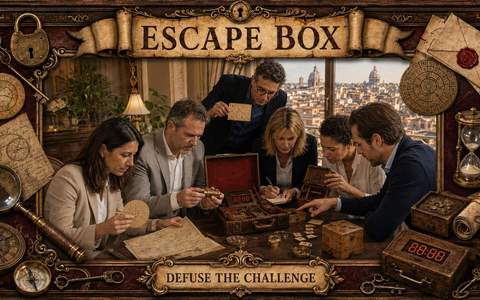
3. Escape Museum: when the small group has to find the solution
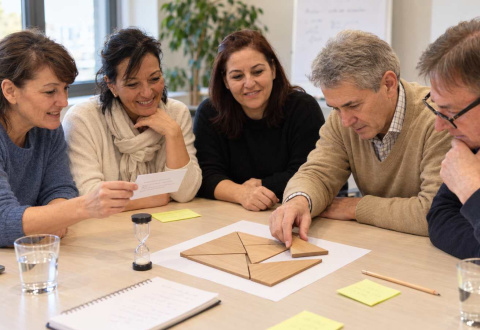
Another idea that’s especially suitable for small teams is an experience based on riddles, observation, and problem solving.
In a setting like a museum or a cultural space, participants can be asked to notice details, interpret clues, and piece together information that initially seems unrelated.
The goal isn’t only to find an answer.
It’s to understand how the group arrives at that answer.
The value of shared problem solving
A small team can be very fast at making decisions.
But speed doesn’t always mean effectiveness.
During a challenge, a tendency may emerge for some people to decide immediately, while others prefer to gather more information.
The experience helps teams compare different styles.
And when the group manages to find a balance, the result can become more effective.
Artistic Team Building: an idea to value every contribution
Not all Team Building activities have to be competitive.
Some experiences work precisely because they invite people to build something together.
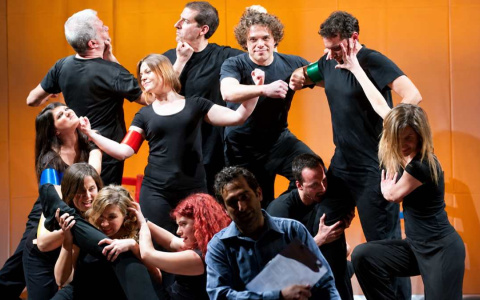
An Artistic Team Building can be an interesting solution for small groups that want to work on creativity, collaboration, and building a shared outcome.
Let’s imagine a large artwork made up of different canvases.
Each participant works on a part.
At first, though, no one can see the complete result.
Only at the end, when all the canvases are put together, does the image appear.
A simple, yet effective metaphor
It’s hard not to find a connection to everyday work.
Each person can focus on their own task without immediately seeing the entire project.
But the final result depends on the ability of all the parts to work together.
An activity like Nuance – Artistic Team Building can make this metaphor visible and concrete.
Outdoor Team Building: getting out of the office to change perspective
Sometimes the best way to change a dynamic is to change the environment.
An outdoor activity lets the group step out of routine and interact in a completely different context.
Rome offers many options.
You can work through an urban route, use parks and green spaces, or build experiences that combine movement, discovery, and play.
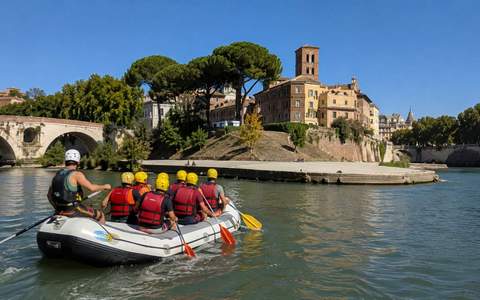
Places like Villa Borghese, the Parco degli Acquedotti area, or paths along the Tiber can offer interesting settings for activities dedicated to small groups.
When the environment becomes part of the experience
Walking together changes the pace of communication.
There are no desks.
No meeting rooms.
People have to orient themselves, decide where to go, and handle small unexpected moments.
And sometimes, all it takes is taking the wrong turn to turn a day into a fun memory.
How to choose the right Team Building for a small business
Group size matters, but it isn’t the only factor to consider.
Before choosing an activity, it can help to define a few key points.
What’s the goal?
A Team Building can be organized to:
-
improve communication;
-
help integrate new people;
-
celebrate a result;
-
develop creativity;
-
work on problem solving;
-
strengthen trust;
-
simply create an occasion to spend time together.
Having the goal clear helps you choose a more consistent experience.
How much time do we have?
A small business can organize activities lasting a few hours, half a day, or a full day.
The ideal duration depends on the program and the group’s needs.
A short activity can be perfect for breaking the routine.
A longer experience, on the other hand, allows you to develop a more complex narrative by alternating challenges, discovery moments, and friendly get-together opportunities.
Budget isn’t the only criterion
When we talk about Team Building for small businesses, budget is naturally an important factor.
But choosing exclusively based on price can be limiting.
An effective activity should also be evaluated based on engagement, the quality of the experience, alignment with the goals, and the ability to leave a positive memory.
You don’t always need a complex event.
Sometimes, a good idea—carried out in the right context—can have a much greater impact.
Small businesses, tailor-made experiences
One of the advantages of a smaller team is the ability to build more personalized experiences.
A big event often has to follow a very rigid structure.
A small group, however, can allow for more flexibility.
You can choose specific routes, adjust the challenge level, create dedicated moments, and build an experience that feels closer to the team’s personality.
An example? A day in the heart of Rome
The day could begin with a challenge in the historic center.
Teams cross Piazza Navona, look for clues around the Pantheon, complete a mission near Campo de’ Fiori, and must make decisions within an established time limit.
Then comes a break.
The group regathers, shares what happened, and discovers each other’s strategies.
In the afternoon, the experience continues with a creative or food-related activity.
At the end of the day, Rome wasn’t just the backdrop for the event.
It became part of the Team Building.
The real advantage of a small team: everyone can be a protagonist
In a large company, it can happen that you take part in an event alongside people you’ve just met.
In a small business, though, every shared experience can have a more direct impact on everyday relationships.
People who participate in Team Building will go back to working together the next day.
They’ll revisit the dynamics they experienced during the activity.
They’ll remember who found the solution, who suggested an unexpected idea, and who managed to keep the group together during the most confusing moments.
And perhaps that’s where the most interesting value lies.
Team Building doesn’t have to magically turn a group into a perfect team.
But it can give people new tools to get to know one another.
It can create a shared language.
It can generate shared memories.
And it can remind everyone that, even in smaller companies, no important result is truly achieved alone.
FAQ – Team Building for small businesses
How many people are needed to organize a Team Building?
There is no universal minimum number. Many activities can be designed and adapted for small groups as well, highlighting everyone’s direct engagement.
What is the best Team Building for a small group?
It depends on the goal. A treasure hunt is ideal for collaboration and problem solving, a Cooking Team Building fosters a friendly atmosphere, while an artistic activity can enhance creativity and the building of a shared outcome.
How long does a Team Building for a small business last?
It can last a few hours, half a day, or a full day. The choice depends on the type of activity, the number of participants, and the company’s objectives.
Is it possible to organize a Team Building in Rome for a few colleagues?
Yes. Rome offers many opportunities for small teams, thanks to the possibility of creating urban routes, cultural experiences, food-related activities, and customized challenges.
Is a Team Building still useful if colleagues already know each other very well?
Yes. Knowing each other doesn’t necessarily mean knowing how other people will react when facing a challenge, an unexpected event, or a problem to solve together. An experience different from everyday work can reveal new dynamics.
How much does activity customization matter?
Very much. For a small team, the ability to adapt the experience to the group’s goals and characteristics can make Team Building more engaging and meaningful.
If you want to experience this or other similar activities, click here—you’ll find our proposals:
Request a free quote and receive all the information about your Team Building experience.
You can also request a free quote and receive all the information about your Team Building experience.