





























The Legends of Rome That Can Turn into an Unforgettable Team Building
Rome is a city that doesn’t just tell its own story.
It whispers it.
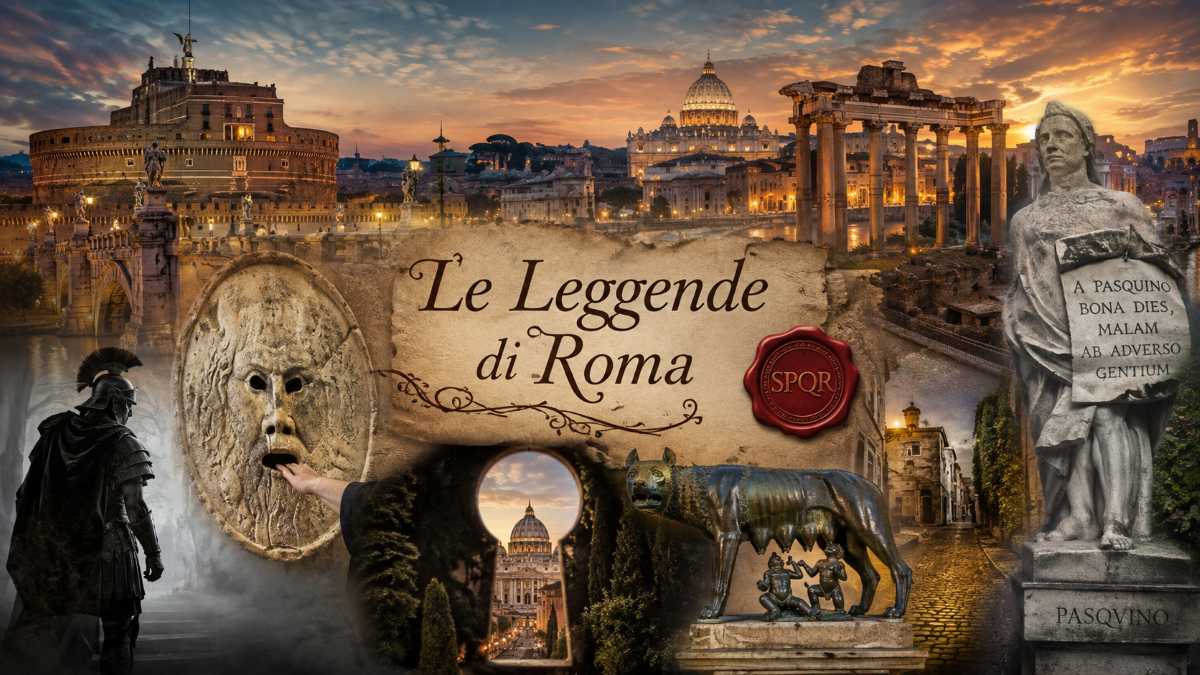
It does so through statues that seem to watch passersby, alleys where time appears to have stopped, squares lit by sunset, and monuments that safeguard mysteries passed down for centuries.
Every stone of the Capital holds a legend. Some are known all over the world, others are told only by those who truly live Rome.
And that’s precisely where an original Team Building idea takes shape: turning ancient tales, riddles, and mysteries into one great collaborative adventure.
Not a simple guided tour, but an immersive experience where each team becomes the protagonist of a mission among history, culture, and imagination.
Because legends have a special feature: they spark curiosity, draw people in, and push them to search together for an answer. Exactly what happens within a work team.
Why Legends Are Perfect for Team Building
Stories have always had the power to bring people together.
When a group shares a story, the desire to understand it, interpret it, and discover its meaning naturally arises.
Adding this narrative element to a Team Building activity means creating an experience capable of developing essential skills such as:
-
collaboration;
-
communication;
-
problem solving;
-
observation;
-
lateral thinking;
-
leadership;
-
time management;
-
creativity.
Each legend becomes a clue.
Each monument turns into a test.
Each team builds its own path toward the final solution.
The Legend of the Mouth of Truth
When Sincerity Becomes a Challenge
One of Rome’s most famous legends tells that the mysterious marble mask can bite the hand of anyone who tells a lie.
During a Team Building, this story can be transformed into a series of challenges dedicated to mutual trust.
Participants will need to distinguish true information from false, collaborate, and verify clues before making a decision.
The stop finds its ideal setting at the Mouth of Truth.
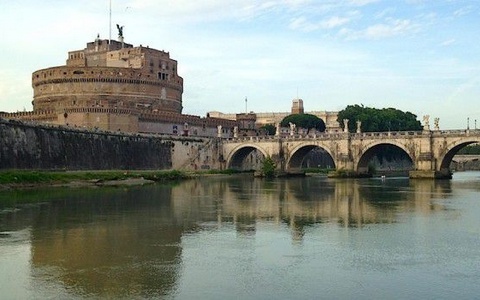
The Ghost of Castel Sant’Angelo
A Mystery Spanning Two Thousand Years
From an imperial mausoleum to a fortress, from a prison to a papal refuge.
Castel Sant’Angelo is one of the places richest in stories and legends.
According to tradition, characters linked to the city’s most fascinating centuries would still roam within its walls.
This setting is perfect for investigative missions, historical riddles, and observation challenges, where every architectural detail can hide the next solution.
Pasquino and the Talking Statues
Communicating Effectively
Rome has a unique heritage: the famous talking statues.
Among them, the most famous is without a doubt the Statue of Pasquino.
In the past, citizens posted satirical messages aimed at the powerful.
This urban legend can become a fun activity dedicated to communication.
The teams will need to interpret hidden messages, reconstruct sentences, and collaborate to understand the meaning of the clues.
The Secret of the Aventine Hill
The Most Famous Keyhole in Rome
On the Aventine Hill there is one of the most surprising viewpoints in the city.
By looking through the famous keyhole of the Priory of the Knights of Malta, you can admire a unique view of St. Peter’s Dome.
This place represents a perfect metaphor for teamwork.
Only by looking from the right spot do you get the full vision.
Exactly like what happens in work groups.
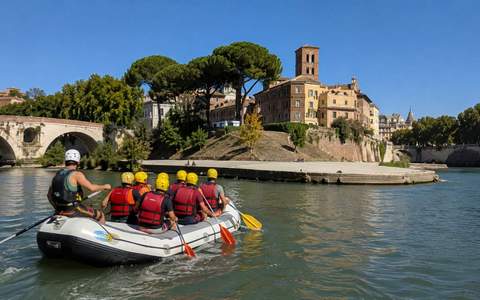
The Mystery of the Tiber Island
Between History and Superstition
The Tiber Island has long been surrounded by mysterious tales.
According to some traditions, its origin would be linked to the fall of Rome’s last king.
Other stories speak of miraculous healings and hidden symbols.
During a treasure hunt, these tales can become historical riddles to solve through observation and logic.
Piazza Navona and the Mystery of the Rivers
Reading the Symbols
The spectacular statues of the Fountain of the Four Rivers in Piazza Navona are surrounded by numerous popular legends.
One of the most famous says that one of the statues protects its gaze to avoid seeing a nearby church.
Although historically unfounded, this curiosity becomes an extraordinary starting point for activities dedicated to critical thinking and information verification.
The Capitoline Hill and the She-Wolf
Building a Team Like Romulus
On the Capitoline Hill, the story of Rome’s founding offers endless narrative possibilities.
Romulus and Remus represent the symbol of major challenges, leadership, and the ability to make decisions.
Teams can take on strategic trials inspired by the birth of the city, developing organizational skills and a collaborative spirit.
How to Turn a Legend into a Team Building
Storytelling and Gamification
The best experiences don’t just stop at telling a story.
They make you live it.
Each participant receives a mission.
Each challenge leads to the next.
Interactive tablets, digital maps, quizzes, photos, secret codes, and collaborative challenges turn Rome into one great open-air game.
Gamification increases engagement and makes learning feel natural.
Personalizing the Path
Each company can include within the experience:
-
company values;
-
mission;
-
meeting objectives;
-
products;
-
motivational messages;
-
custom prizes.
In this way, the legend becomes an integral part of the corporate story.
Why Choose Rome
Very few cities have a narrative heritage comparable to that of the Capital.
Walking among the Pantheon, the Imperial Fora, Trastevere, and Villa Borghese, every corner can become a chapter of the story the team will experience together.
The result is an activity that truly can move, engage, and strengthen relationships among colleagues.
Because the real hidden treasure in Rome’s legends isn’t the solution to the riddle.
It’s the ability of people to listen to each other, collaborate, and build together an experience that will continue even after returning to the office.