































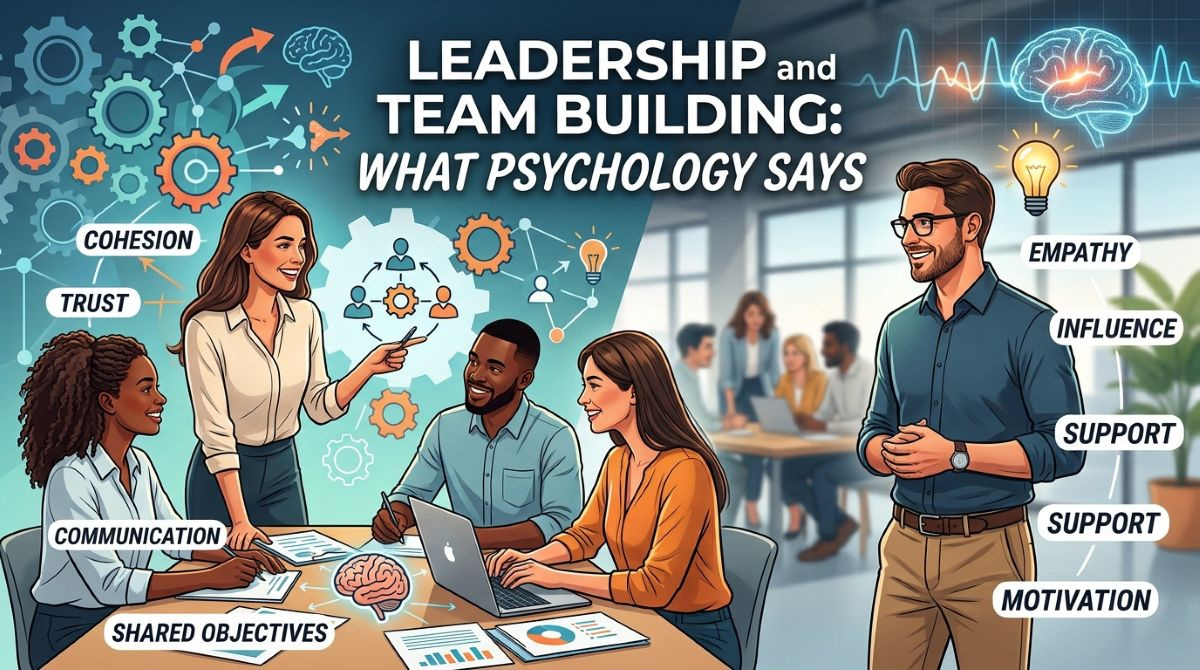
Leadership and Team Building: what psychology says
Leadership doesn’t come from a desk.
It doesn’t depend exclusively on a role, a title, or a position in the organizational chart.
True leadership emerges when a group faces a challenge, makes decisions under pressure, overcomes an unexpected obstacle, or achieves a shared goal.
It’s exactly in these moments that organizational psychology offers an interesting way to look at things: the best leaders aren’t necessarily those who talk the most, but those who manage to create trust, engagement, and collaboration.
And that’s why Team Building is one of the most effective tools for developing authentic leadership.
Experiential activities, in fact, make it possible to observe real behaviors, foster new dynamics, and bring out abilities that often remain hidden in day-to-day work routines.
What it really means to be a leader
For many years, leadership has been associated with command.
Today, psychology tells a different story.
The modern leader doesn’t give orders.
Inspires.
Listens.
Engages.
Helps the group bring out its best.
Studies on transformational leadership show that people follow more easily those who can convey trust, vision, and confidence rather than those who simply exercise authority.
Team Building creates exactly this kind of context.
A day among Rome’s monuments
A corporate team takes part in a treasure hunt in the historic center.
The first challenge takes place in front of the Pantheon.
There is no designated person in charge.
And yet, someone naturally takes the initiative.
Doesn’t raise their voice.
Doesn’t impose decisions.
Listens to ideas.
Assigns tasks.
Motivates the group.
When the team reaches the next stop in Piazza Navona, everyone realizes that person has led the team without anyone having asked them to.
This is one of the most interesting aspects observed by psychology.
Leadership emerges spontaneously when the context encourages collaboration and shared responsibility.
The psychology of leadership
The main theories
Over the years, psychology has identified several leadership models.
Transformational leadership
The leader inspires change through enthusiasm, personal example, and motivation.
It’s one of the most effective approaches during Team Building activities.
Situational leadership
There is no single style that’s always valid.
The leader adapts their behavior based on people and context.
During a team game, this ability becomes essential.
Shared leadership
In the most effective groups, leadership is distributed.
Each participant can lead the team when they have the best skills to face a particular challenge.
Empathetic leadership
Empathy makes it possible to understand others’ emotions, needs, and difficulties.
It’s one of the most requested skills in modern organizations.
Why Team Building develops leadership
Learning by doing
Experiential activities involve people in real situations.
There are no purely theoretical simulations.
Every decision produces immediate consequences.
Every mistake becomes learning.
Every success strengthens trust.
This process is exactly what makes Team Building an extremely effective tool.
Rome as a leadership laboratory
POIs that turn every activity into an experience
The city offers unique scenarios to practice managerial skills.
Colosseum
A symbol of resilience and organizational capability.
Pantheon
A perfect example of vision and ingenuity.
Piazza Navona
Ideal for collaborative activities and group dynamics.
Castel Sant’Angelo
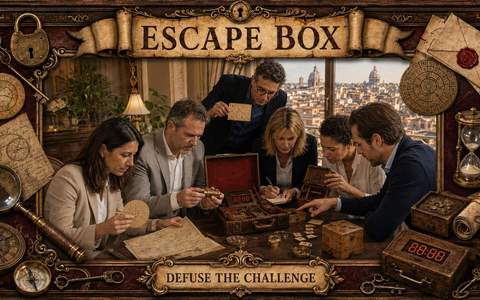
Perfect for escape games and investigative-style challenges.
Trastevere
Its alleys encourage communication and navigation.
Villa Borghese
A natural setting for leadership-focused outdoor activities.
Roman Forum
The place where, more than two thousand years ago, decisions were made that changed the fate of an empire.
The skills that emerge
Beyond the corporate role
During a Team Building, qualities often invisible in everyday life come to the surface.
Decision-making ability
Choosing the best strategy quickly.
Effective communication
Conveying information clearly.
Stress management
Staying sharp even in the most complex situations.
Problem Solving
Turning obstacles into opportunities.
Empathy
Understanding others’ perspectives.
Motivation
Engaging the group toward a shared goal.
Trust
The foundation of every authentic leadership.
The role of emotions
Leadership is born from trust
Neuroscience shows that emotions deeply influence the decision-making process.
A leader who can create a positive atmosphere encourages greater collaboration, creativity, and openness to change.
During a Team Building, this becomes clearly visible.
People feel freer to experiment, suggest ideas, and take on responsibility.
It is in this environment that leadership grows naturally.
Storytelling makes leaders memorable
People remember experiences.
They remember emotions.
They remember those who were able to bring the group together.
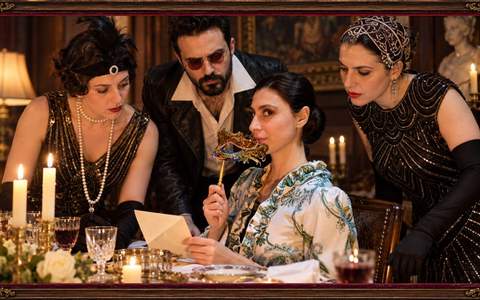
Every Team Building tells a story.
A mission.
A mystery.
A challenge.
And it’s precisely within this narrative that the best leaders emerge.
Not those who seek visibility.
But those who help others grow.
Leadership means growing the group
Organizational psychology is increasingly in agreement.
Effective leadership isn’t about being at the center of attention.
It’s about creating the conditions so that every person can express their potential.
Team Building offers exactly this opportunity.
Through engaging experiences, collaborative activities, and shared challenges, it lets leaders test themselves and teams discover new ways to work together.
Because a great leader doesn’t build followers.
They build people who can lead.