






























Why food brings people together: the power of sharing an experience at the table
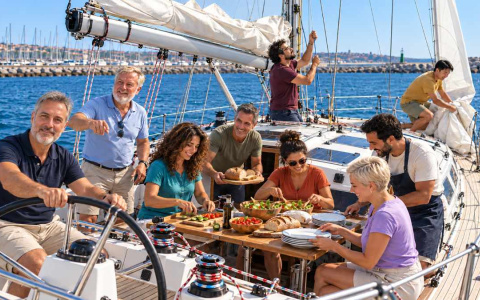
There’s a moment, during every shared lunch or dinner, when we stop being simply colleagues, customers, friends, or perfect strangers.
It happens almost without us noticing.
Someone tells a funny story, someone tries something for the first time, and someone else tries to explain a recipe that “at my place is made differently.” Conversations become more spontaneous, distances get shorter, and around a table, people start to truly get to know each other.
Food has always had this power: creating connections.
But why does eating together generate such a strong sense of belonging? And why can a culinary experience also become an effective tool for corporate Team Building?
The answer is not only about taste.
It has to do with emotions, memories, collaboration, and one of the most universal experiences that human beings share for thousands of years.
Food as a universal language
Before meeting rooms, presentations, and digital platforms, people met around food.
Sharing a meal meant building relationships, celebrating an important moment, welcoming someone, or simply spending time with others.
Food doesn’t need translation.
A dish can tell a family, a place, a journey, or a memory. It can spark a conversation even between people who, just a few minutes earlier, hadn’t found a common topic.
A dish can tell who we are
Let’s think of a simple question:
“How is this dish really made?”
The answer is rarely straightforward.
There’s someone who learned from their grandmother, someone who adds a special ingredient, someone who insists the original recipe is completely different. And it’s precisely at that moment that food becomes a story.
People aren’t talking only about ingredients anymore.
They’re sharing a piece of their own history.
In a corporate setting, this mechanism can be especially interesting. A culinary activity makes it possible to step out of usual professional roles and meet in a more spontaneous space.
The manager, the new hire, the colleague from another department, and the international manager can all find themselves in front of the same table with a very simple goal: creating something together.
Why eating together creates connection
The mealtime moment requires something that seems even rarer in everyday working life: shared time.
It’s not just about being physically in the same place.
Sharing food means slowing down, observing, listening, and taking part.
The table reduces distances
In the office, there are roles, responsibilities, deadlines, and hierarchies.
During a culinary experience, however, the dynamics can change.
Someone used to leading a meeting might not know how to knead dough. Someone who speaks little during the day could suddenly become a point of reference because they know a technique or a recipe.
This shift in perspective is one of the most interesting aspects of Cooking Team Building.
When the professional role makes room for the person
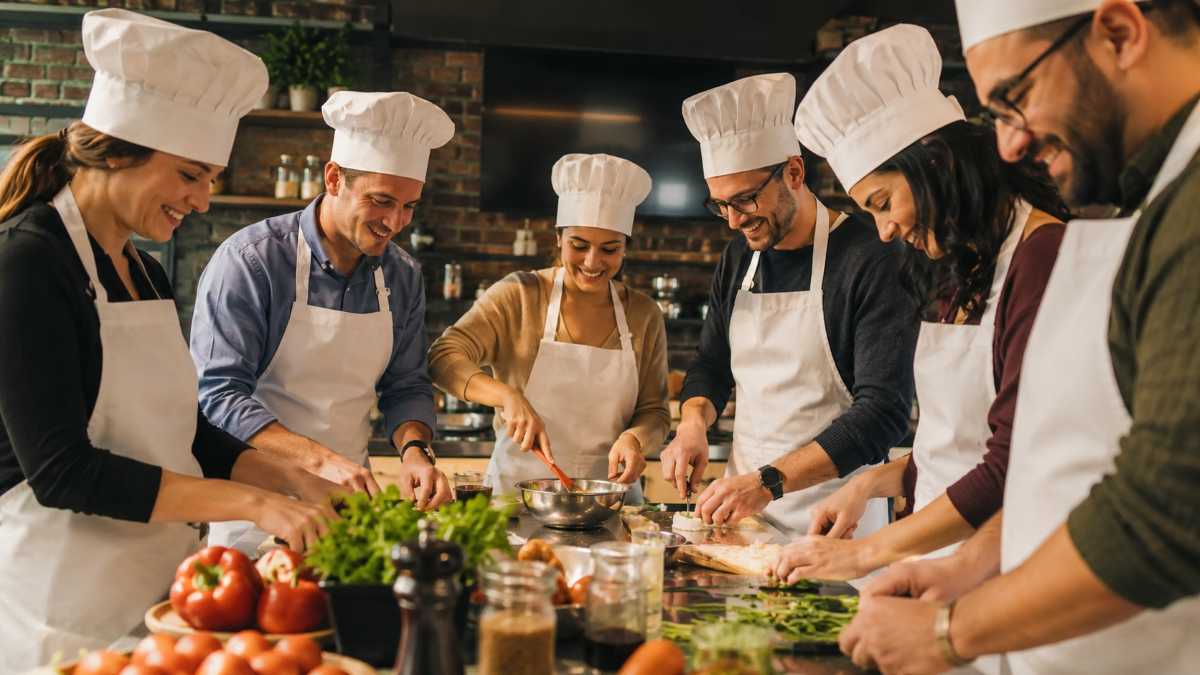
Let’s imagine a group in front of a large work table.
There’s someone who prepares the ingredients, someone who kneads, someone who observes, someone who suggests a solution, and someone who—at first—thinks they’re not particularly good at it.
Then something changes.
To achieve a good result, you need to coordinate.
Someone has to listen to the instructions. Someone else has to manage the timing. A mistake may require a creative solution. A preparation can be improved thanks to an idea from a colleague.
Without almost realizing it, the group is putting into practice some of the fundamental skills of teamwork:
-
communication;
-
listening;
-
collaboration;
-
time management;
-
problem solving;
-
shared leadership;
-
adaptability.
The difference is that it all happens in an engaging, hands-on context.
Doing it together is different from doing it alone
One of the reasons food brings people together so easily is that it can turn a group of people into a team.
Preparing a dish together means taking on a small project.
You need to organize resources, respect timing, and make decisions.
And in the end, there is a visible and shareable result.
This element is especially important in Team Building experiences: the result doesn’t belong to just one person.
It belongs to the group.
Cooking Team Building: when the kitchen becomes a team experience
A corporate culinary activity is not simply an organized lunch.
The difference lies in participation.
In Cooking Team Building, participants become protagonists of the experience.
They can prepare fresh pasta, take on Italian cooking, face culinary challenges, organize a brigade, or collaborate to create a menu.
The final goal isn’t just to eat.
It’s to reach the result together.
From preparation to sharing
The most interesting part often comes at the end.
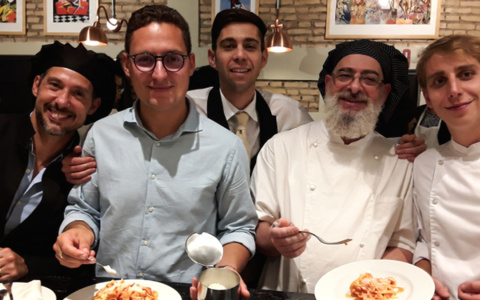
After collaborating, discussing, experimenting, and maybe also making a few small mistakes, the group sits down at the table.
And what gets shared isn’t only the food.
You share the moments experienced during the activity.
A comment about dough that’s too difficult can turn into a joke. A solution found at the last moment can become a small group success.
It’s this step that makes the experience memorable.
The emotional value of what we create together
A dish bought at a restaurant can be excellent.
But a dish prepared together brings something extra: a story.
Each preparation becomes the result of a sequence of decisions, attempts, and collaborations.
It’s the same difference that exists between watching something and living it firsthand.
The active experience leaves a stronger memory because it directly involves people.
Rome: a city where food tells a story
Talking about food and sharing in Rome means entering an even richer dimension.
Here, gastronomy is not just a tradition.
It’s part of the city’s identity.
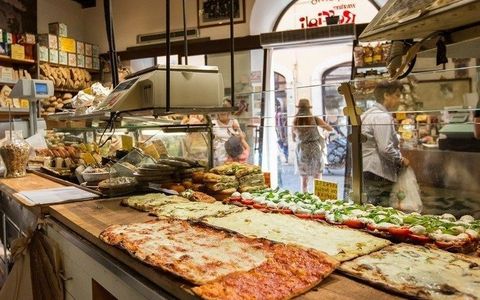
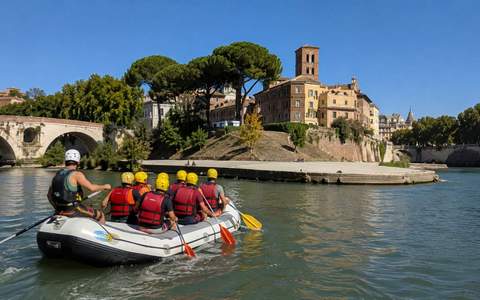
A Team Building day can turn into a journey through flavors, neighborhoods, and stories—linking the culinary experience to discovering some of the most fascinating places in the Capital.
Trastevere: the pleasure of being together
Trastevere is probably one of the places that best represents the relationship between Rome and conviviality.
Walking through its streets means passing through a neighborhood where the social dimension has always been an integral part of everyday life.
Squares, alleys, and local venues tell an idea of a city made of encounters and conversations.
For a corporate group, Trastevere can become the starting point for an experience where discovery, play, and gastronomy come together.
Testaccio and the memory of Roman cuisine
Testaccio, on the other hand, is one of the places most closely connected to the city’s gastronomic history.
Here, food tells the social transformations of Rome, popular habits, and the ability to turn simple ingredients into dishes that have become symbols of Italian cuisine.
A path through flavors and stories can offer the team a different way to get to know the city: not only by looking at it, but by tasting it too.
Campo de' Fiori and the value of meeting
Campo de' Fiori has for centuries been a place linked to exchanges, encounters, and the city’s everyday life.
The market and the square perfectly reflect the relationship between food and social life.
Ingredients become a starting point.
People become the most important part of the experience.
And perhaps this is one of the best metaphors for understanding the value of Team Building: tools are important, but it’s the way people use them together that makes the difference.
Food as a multisensory experience
A culinary activity engages multiple dimensions at the same time.
There are the aromas, colors, textures, the sounds of the kitchen, and of course the taste.
This multisensory component makes the experience more immersive.
When an experience involves the senses, it also involves people
Think of the sound of dough being worked on the table.
To the smell of an ingredient prepared just moments before.
To the curiosity to taste something even before the dish is finished.
They’re small moments, but they help create a shared experience.
In the corporate world, where many interactions happen through screens, emails, and online meetings, being together to do something concrete can take on even greater value.
A break from routine that can create new relationships
Changing the context often also changes the way people relate to each other.
The colleague we see every day in the office may turn out to be completely different outside the work environment.
A particularly reserved person may show creativity.
A team member may surprise with organizational skills that usually don’t stand out.
Team Building creates exactly this opportunity: to observe the group from a different perspective.
What the kitchen teaches a team
The kitchen is a setting very much like a business project, more than it might seem.
There are goals.
There are timelines.
There are limited resources.
There are unexpected events.
And there’s a need to collaborate.
Communication: saying the right thing at the right time
In the kitchen, unclear communication can create confusion.
The same happens in a team.
During a shared activity, participants directly experience the importance of explaining, listening, and checking that information has been understood.
Leadership and collaboration
Not all situations require the same type of leadership.
Sometimes someone needs to make a decision.
Other times it’s more important to listen to those with greater experience in a specific activity.
A culinary experience allows you to observe these dynamics in a natural way.
Problem solving and adaptability
An ingredient is missing.
A step didn’t go as planned.
Time is running out.
Instead of being simply a problem, the unexpected can become part of the experience.
The group has to find a solution.
And it’s exactly in these moments that collaboration becomes concrete.
Why food is especially effective for international teams
Food can overcome many cultural barriers.
Recipes change, habits are different, and ingredients can tell traditions far away—but the act of sharing is recognizable everywhere.
For this reason, a culinary experience can be particularly suitable even for international groups.
Learning differences through a shared experience
A team made up of people from different countries can discover how interesting it is to compare their habits.
Some are used to eating at completely different times.
Some consider a particular ingredient essential, while others have never even tasted it.
Some tell a recipe similar to one found in their own culture.
From these differences, spontaneous conversations and new connections can arise.
In this sense, food doesn’t eliminate differences.
It turns them into an opportunity for discovery.
From the table to the company: what remains after the experience
The most important question isn’t only what happens during Team Building.
It’s what may remain after.
Of course, a single experience doesn’t automatically transform an organization.
But it can create something valuable: a shared memory.
Shared experiences become part of the team’s story
After weeks or months, people might not remember every detail of a meeting.
But they can remember the day they prepared something together.
They can recall a challenge, a joke, or an unexpected moment.
These memories become shared reference points.
Having shared reference points helps build a sense of belonging.
The value of shared memory
A team is not only a set of people who work in the same place.
It’s also the sum of the experiences those people have lived through together.
Food can become one of those moments.
A simple, immediate, and surprisingly powerful language.
Why choose a gastronomic Team Building in Rome
Rome offers a unique combination of elements.
There is history.
There are neighborhoods.
There are markets.
There are traditions.
And of course there’s a culinary culture known all over the world.
A culinary activity can be combined with city routes, games, treasure hunts, team challenges, and moments of discovering the city.
The result is an experience that brings together Team Building, culture, and conviviality.
From the alleys of Trastevere to the gastronomic history of Testaccio—passing through squares and iconic places in the historic center—Rome can become a setting where every experience tells something.
And, just like with a good recipe, the best ingredients are often the people.
In the end, the secret is simple: share
Perhaps the real reason food brings people together is simpler than we imagine.
Eating together means stopping.
Spending time.
Listening.
Sharing stories.
Closing distances.
In an increasingly fast-paced work world, creating authentic opportunities for connection can have enormous value.
A gastronomic Team Building is not only a fun activity.
It can become a moment when the group discovers that collaborating doesn’t simply mean working side by side.
It means creating something that, on your own, wouldn’t have been exactly the same.
And when it’s time to sit down at the table, sharing that result takes on a special meaning.
Because, ultimately, food nourishes people.
But it’s the experience you live together that can also nourish a team.
If you want to live this experience—or something similar—click here; you’ll find our proposals:
Request a free quote and get all the information about your Team Building experience.
You can also request a quote and receive all the information about your next Team Building experience.